About Daily Life
The Buddha taught householders as well as monastics, and much of his teaching concerns ordinary life: honest livelihood, kind speech, care for family and generosity. Practice is not only what happens on the meditation cushion. It is how we meet each person and task through the day, with sati and a heart that knows its own reactions.
Ajahn Chah taught lay people as he taught himself. The Hidden Work of Family Life — Dhamma in Marriage and Relationships gathers his advice to householders: talk things through patiently, settle your own disputes, and do not carry fire into or out of the house. He reminded villagers that bhāvanā, cultivation of the mind, continues in every posture, not only in sitting.
Ajahn Dtun, who speaks most often on this page, encourages lay people to fulfil their roles well as parents, children, partners and friends while still training the mind; Live a Human Life With Purpose places work, family and the precepts within that larger direction. Ajahn Plien offers practical advice on keeping practice alive amid busy work, as in Training the Mind for Happiness — Ajahn Plien Q&A, and Ajahn Pannavaddho speaks frankly about morality for lay Buddhists in the West.
Whether the concern is relationships, work or raising a family, the talks and Q&A here show the Dhamma as something to live at home.
Teachings on Daily Life
97 teachings
Insights from all teachers, across every format, together with related Dhammapada verses.
 05:14
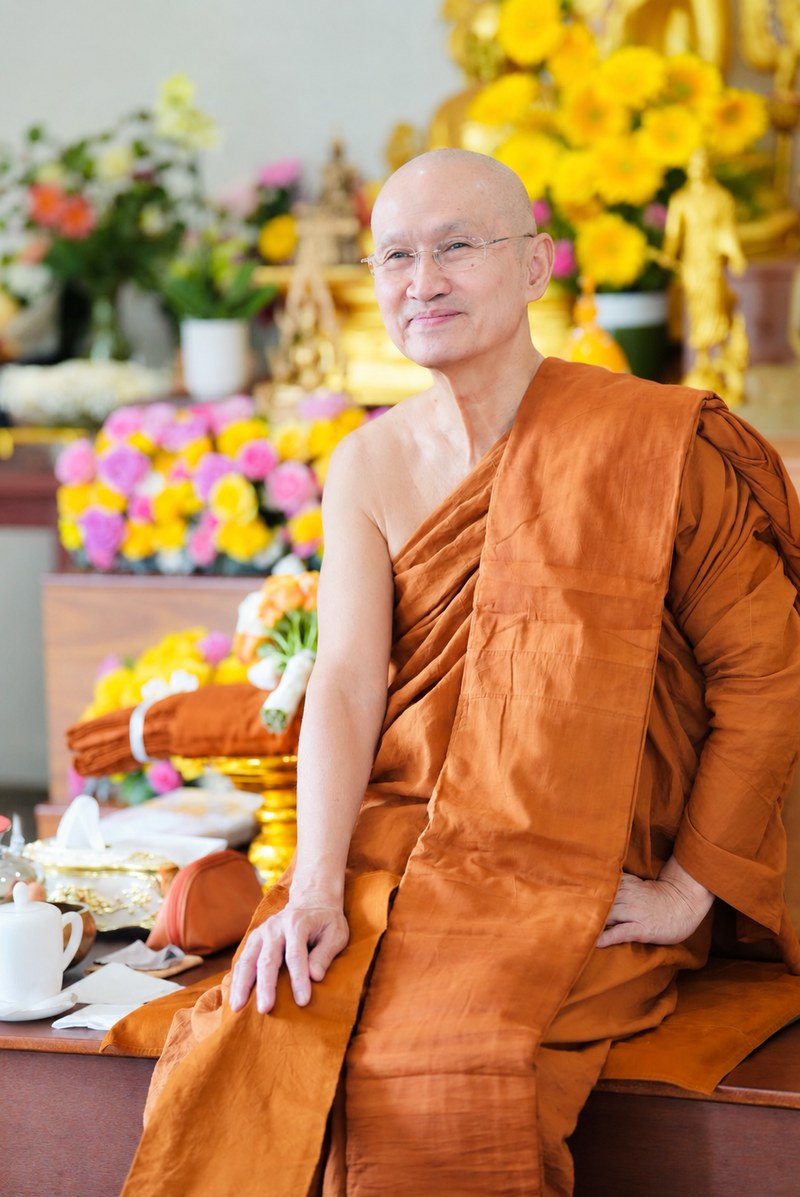 Ajahn Dtun
Trust the Buddha’s Wisdom — The Five Precepts
Selected SectionVenerable Ajahn Dtun – The Wisdom of Keeping the Five Precepts Venerable Ajahn Dtun offers a clear and practical reflection on the Five Precepts—simple guidelines that help us live with greater wisdom, mindfulness, and care for ourselves and others. The Five Precepts are: * To refrain from taking life and harming other beings. * To refrain from taking what has not been given. * To refrain from sexual misconduct. * To refrain from false speech and lying. * To refrain from intoxicating drinks and drugs. Ajahn Dtun explains that although these precepts may appear simple, their value becomes clearer when we carefully consider the harm that can arise when they are broken. In particular, he reflects on the consequences of alcohol. Drinking can harm our health, waste money, and weaken mindfulness. When a person becomes intoxicated, they may also become more likely to break the other precepts, including becoming involved in arguments or harmful behaviour toward others. Rather than simply following the precepts because we are told to, Ajahn Dtun encourages us to **understand the harm that comes from breaking them**. When we clearly see the consequences, we can naturally begin to understand the benefits of keeping them. He also offers a practical reflection: money that might otherwise be spent on alcohol could instead be saved and used for more meaningful purposes, such as providing food, gifts, or support for our children and family. Ajahn Dtun explains that keeping some of the precepts is still beneficial, but to truly live according to the Buddha's guidance, we should strive to maintain all five. For those who are not dependent on alcohol, giving it up can be approached as a clear and meaningful resolution. Instead of seeing abstinence as a restriction, we can recognise the opportunity to protect our health, preserve our resources, maintain mindfulness, and use our money for more beneficial purposes. Ajahn Dtun also reminds us that the Buddha taught his followers to abstain from alcohol and regarded the selling of alcohol as a wrong form of livelihood. At the heart of this teaching is **trust in the Buddha's wisdom**. The Buddha understood what is harmful to living beings and what is beneficial. His teachings on the Five Precepts are therefore not arbitrary rules, but guidance intended to protect us from actions that create harm and suffering. In a society where people can easily seek happiness through sensory pleasures and material possessions, mindfulness and wisdom can become easily neglected. Ajahn Dtun encourages us to look more deeply at where we seek happiness and to recognise the limitations of relying on sensory experiences and material things for lasting contentment. The Five Precepts provide a foundation for a life guided by mindfulness, restraint, compassion, and wisdom. By understanding their purpose and seeing their benefits for ourselves, we can gradually develop greater confidence in living according to the Dhamma. May this teaching by Venerable Ajahn Dtun encourage us to reflect carefully on the Five Precepts, understand the consequences of our actions, protect ourselves and others from harm, and develop greater trust in the wisdom of the Buddha's teachings. 🍃 **The Still Path** 🍃 🔔 Subscribe for more authentic Dhamma teachings #AjahnDtun #Dhamma #Buddhism #FivePrecepts #PancaSila #BuddhistTeachings #DhammaTalk #Meditation #Mindfulness #Wisdom #ThaiForestTradition #AjahnChah #MindTraining #InnerPeace #SpiritualPractice #BuddhistPractice
 00:19
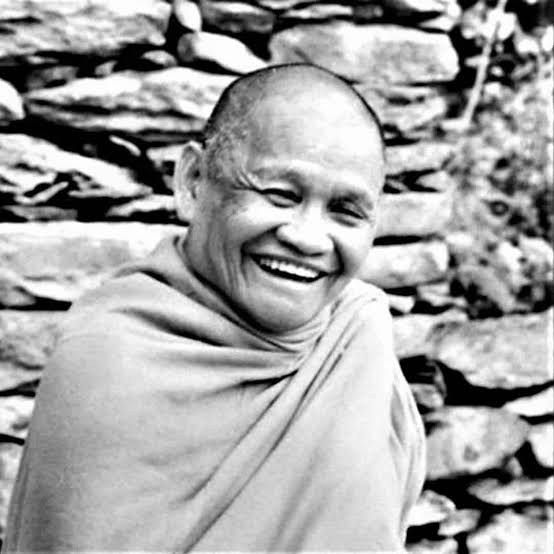 Ajahn Chah
If you want to wait for the future Buddha, don't practice
Short TeachingThese short reflections draw on the timeless teachings associated with Venerable Ajahn Chah, one of the most influential meditation masters of the Thai Forest Tradition. His teachings continually point us back to the most important place of practice — our own mind.
 33:44
Ajahn Dtun
The Wealth That Follows You Beyond This Life
Complete Talk🔅 Venerable Ajahn Dtun – What Are You Really Investing In? Venerable Ajahn Dtun offers a profound reflection on how we use the precious time and opportunity given to us in this human life. In this Dhamma teaching, he draws a deep comparison between worldly investment and spiritual investment—reminding us that while we spend our time and energy seeking external wealth, we should also make the effort to develop the wealth that exists within the mind. In worldly life, we invest our time and effort in work, business, and the pursuit of material security. In the same way, coming to the monastery, giving our time, practising generosity, and developing goodness are forms of spiritual investment—an investment in the inner wealth of the heart and mind. This inner wealth is far more valuable than anything that can be accumulated externally. Ajahn Dtun explains that the foundation of this journey is Right View (Sammā-diṭṭhi). When we do not see clearly, we can spend our entire lives pursuing worldly happiness while allowing our days and years to pass without meaningful spiritual development. But when we develop Right View, we begin to recognise the precious opportunity of being born as a human being and encountering the Buddha's teachings. The teaching also reminds us that the cultivation of goodness requires time, commitment, patience, and perseverance. Just as a person must invest time and effort in worldly work to receive its results, spiritual qualities must also be patiently cultivated. Every act of generosity, every effort to keep the precepts, and every sincere effort to practise becomes part of the gradual development of our spiritual path. Ajahn Dtun also reflects on the importance of supporting places where people can practise the Buddha's teachings. The establishment and support of monasteries provide opportunities for monastics to practise and for the Buddhist community to come together, cultivate goodness, and develop their minds. A particularly meaningful part of the teaching is his reflection on the spread of the Buddha's teachings. He recalls the ancient tradition of Dhamma being carried to different places and considers the opportunity to establish places of practice in Australia as a way of supporting people who sincerely wish to develop themselves through the Dhamma. Yet the deepest message is that the Dhamma journey is a journey of our own making. It may be long, just as a physical journey may be long, but if we have patience and perseverance, resting when we are tired and continuing when we have strength, eventually we reach our destination. In the same way, the development of the mind requires continuous effort and determination. Ajahn Dtun reminds us that progress on the spiritual path will not be the same for everyone. Whether we arrive quickly or slowly depends upon how we conduct our lives, how heedfully we practise, and how much effort we make to develop ourselves according to the Buddha's teachings. Ultimately, this Dhamma reflection invites us to ask a very important question: What are we really investing in with our life? Are we investing only in things that will eventually disappear, or are we also cultivating the inner spiritual wealth that supports the journey beyond this temporary life? May this teaching inspire us to use our precious human life wisely, develop Right View, cultivate generosity and goodness, practise the Dhamma with patience and perseverance, and continually invest in the true wealth of the heart. 🔔 Subscribe for more authentic Dhamma teachings 🍃 The Still Path 🍃 #AjahnDtun #Dhamma #Buddhism #Meditation #ThaiForestTradition #AjahnChah #SpiritualWealth #RightView #Merit #BuddhistTeachings #DhammaTalk #MindTraining #InnerPeace #SpiritualPractice #TheStillPath
 07:27
Ajahn Dtun
Should You Reach Stream-Entry Before Starting a Family?
Question & AnswerShould a Buddhist practitioner attain stream-entry before getting married or starting a family? In this personal Dhamma teaching, Venerable Ajahn Dtun responds to a question about family life, children, spiritual practice, and whether household responsibilities can become an obstacle on the path. Ajahn Dtun explains that the desire to have a family depends upon each individual. Family life naturally brings additional responsibilities. When we live alone, we mainly care for ourselves. With a partner, both people must care for one another, and when children arrive, the responsibilities become greater still. The questioner wonders whether it would therefore be better to develop the mind to a certain spiritual level—perhaps stream-entry—before beginning family life. Ajahn Dtun points out an important difficulty with this idea: we cannot decide in advance exactly when a particular stage of awakening will occur. Stream-entry does not arise simply because we wish to attain it by a certain time. We must create the causes through sincere practice and allow the mind to develop according to its accumulated pāramī and spiritual faculties. Even monastics may practise for an entire lifetime without attaining a particular noble stage, while nevertheless developing valuable spiritual qualities that support future progress. Ajahn Dtun then shares his own experience. As a young layman, he originally expected to finish his studies, work, and eventually have a family. But the causes and conditions of his life changed. His interest in worldly life gradually fell away, and his aspiration turned increasingly towards freedom from suffering. When he ordained, he made a strong determination to dedicate his entire life to practice without demanding that a particular attainment occur within a particular timeframe. His approach was simple: continue practising for as long as necessary. The teaching reminds us that spiritual progress cannot be scheduled. Whether living as a householder or monastic, what matters is continually developing virtue, concentration, wisdom, and the causes that lead the heart towards liberation.
 08:15
Ajahn Dtun
Why This Rare Offering Brings Great Merit
Question & Answer🔅 Venerable Ajahn Dtun – The Great Merit of the Forest Cloth Offering Venerable Ajahn Dtun, a highly respected meditation master in the Thai Forest Tradition and a senior disciple in the lineage of Ajahn Chah, explains the profound significance of the Forest Cloth Offering Ceremony and why it is regarded as an exceptionally meritorious act in Buddhism. In this Dhamma teaching, Ajahn Dtun explains that while offering food and the four requisites to the Saṅgha is always a wholesome practice, a Forest Cloth Offering is a much rarer occasion. Because of its rarity and the sincerity with which it is performed, it becomes a powerful opportunity to accumulate great merit (puñña). Ajahn Dtun further explains that when such a ceremony includes members of the Saṅgha who have purified their minds of mental defilements, its spiritual significance extends beyond what can be perceived with ordinary eyes. He describes that there are unseen beings present at these occasions who bear witness to the wholesome actions of those who participate. According to Buddhist tradition, these meritorious deeds are remembered and can arise to support the mind at the moment of death. He also explains the meaning behind the offerings made during the ceremony, including the new shrine, Buddha images, and images of the Buddha's great disciples, Venerable Sāriputta and Venerable Mahā Moggallāna, as well as Mahāpajāpatī Gotamī Therī, the Buddha's foster mother, and a revered Great Bodhisatta. Ajahn Dtun highlights the role of Paritta (protective chanting), explaining that these blessings bring happiness and well-being to both human beings and celestial beings. Throughout the talk, Ajahn Dtun reminds us that not everything that exists can be seen or heard through our ordinary senses. While he speaks only briefly about these unseen aspects to avoid creating misunderstanding or doubt, he encourages practitioners to approach such teachings with faith, humility, and careful reflection rather than criticism, as our intentions and responses also create kamma. This inspiring teaching encourages us to value opportunities for generosity, cultivate wholesome actions with pure intention, and understand that genuine merit extends far beyond what is visible in this life. May this Dhamma reflection deepen your appreciation for generosity, strengthen your confidence in the law of kamma, and inspire you to cultivate wholesome deeds for the benefit of yourself and all beings. 🔔 Subscribe for more authentic Dhamma teachings: 🍃 The Still Path 🍃 #AjahnDtun #ForestClothOffering #Merit #Dana #Kamma #Buddhism #DhammaTalk #ThaiForestTradition #AjahnChah #Generosity #Paritta #BuddhistTeachings #TheStillPath
 03:54
Ajahn Dtun
Is an Anesthesiologist Creating Bad Kamma?
Question & AnswerIs working as an anesthesiologist a wrong form of livelihood in Buddhism? In this Dhamma talk, Ajahn Dtun responds to the question of whether giving anesthesia is unwholesome because it causes a person to temporarily lose consciousness. Ajahn Dtun explains clearly that this is not wrong livelihood. The purpose of anesthesia is to help people during surgery, medical treatment, tooth extraction, and other painful procedures. It is done to reduce pain and support healing, not to harm or kill. Because of this, it should not be seen as sinful or bad kamma. He also points out how unusual this doubt is, saying it is the first time in many years of monkhood that he has heard such a question. Most people gladly accept anesthesia when they need surgery because it helps the body receive treatment more safely and with less pain. This teaching is helpful for doctors, nurses, anesthetists, medical workers, and Buddhist practitioners who want to understand right livelihood, intention, kamma, and compassionate medical care from a Buddhist perspective. 🔔 Subscribe for more Ajahn Dtun teachings, Buddhist reflections, and meditation wisdom. #AjahnDtun #Anesthesia #RightLivelihood #BuddhistTeachings #DhammaTalk #Kamma #MedicalEthics #Buddhism #Surgery #Compassion #Anesthesiologist #ThaiForestTradition #WholesomeLivelihood #DhammaWisdom #Healthcare
 07:34
Ajahn Chah
Generosity as Training in Letting Go
Selected SectionGenerosity is not separate from meditation practice. In this teaching, giving is presented as part of the same training that develops virtue, samādhi, and wisdom. For lay practitioners in particular, generosity helps create the inner and outer conditions in which deeper Dhamma practice can grow. Giving material things trains the mind in a very direct way: it becomes familiar with releasing possessiveness. Each act of generosity challenges the reflex to hold, accumulate, protect, and define happiness through ownership. The object given may be small, but the mental movement is significant. The heart practices letting go. This is why generosity is traditionally described as a basis of merit and an important foundation of the path. It supports wholesome relationships, reduces self-centeredness, and prepares the mind for subtler forms of relinquishment. Meditation eventually asks us to release attachment not only to possessions but also to opinions, moods, identities, and the assumption that changing experiences can provide lasting security. The teaching therefore places everyday conduct within the larger threefold training. Lay life may not provide all the supportive conditions of monastic life, but practice can still be integrated into ordinary responsibilities. Generosity, ethical restraint, and mindful cultivation work together. This section is a useful reminder that the path does not begin only when we close our eyes to meditate. It begins whenever selfishness is recognized and relinquished. By learning to give freely, the mind discovers that release is not loss. It is a form of freedom—and that same movement of letting go becomes increasingly important as practice deepens.
 00:12
 Upasika Kee Nanayon
Without Precepts There Is No Foundation for Purity
Short TeachingWithout the basic order of the precepts, the mind has no firm foundation for purity. Upasika Kee Nanayon reminds us that true spiritual practice begins with restraint, discipline, and sincerity in daily life. A short Dhamma reflection on why morality is not separate from meditation, but the ground from which purity can grow. Hashtags: #UpasikaKeeNanayon #KeeNanayon #DhammaShorts #BuddhistTeachings #Precepts #BuddhistPrecepts #MeditationPractice #DhammaWisdom #SpiritualPurity #MindTraining #Buddhism #ThaiForestTradition #RightConduct #InnerPurity #DhammaReflection
 04:10
Ajahn Dtun
Don’t Absorb Others’ Fear
Selected SectionWhen we sense fear, discomfort, or emotional distress in another being, should we absorb that feeling ourselves? In this Dhamma teaching, Ajahn Dtun explains how to respond with metta, loving-kindness, and upekkha, equanimity, without becoming disturbed by what we perceive from outside. Ajahn Dtun reminds us that the feelings we receive from animals, people, or external situations may sometimes be correct and sometimes not. We should not pay too much attention to these impressions or allow them to make the mind frightened, anxious, or uncomfortable. Instead, if another being is afraid and we are able to help, we should help with kindness. If we cannot help, we can still extend metta and maintain equanimity in the heart. This is the correct way to practice: caring without being overwhelmed, helping without fear, and keeping the mind steady. This teaching is especially helpful for sensitive people, meditators, animal lovers, and anyone learning how to balance compassion with inner peace. 🔔 Subscribe for more Ajahn Dtun teachings, Buddhist reflections, and meditation wisdom. #AjahnDtun #Metta #Equanimity #Upekkha #LovingKindness #BuddhistTeachings #DhammaTalk #EmotionalSensitivity #Compassion #MeditationWisdom #ThaiForestTradition #InnerPeace #Fear #Buddhism #Mindfulness
“Mindfulness is life.”
Ajahn Chah