About Mindfulness
Sati, mindfulness, is the quality of remembering to be present and aware of what is happening in body and mind. Together with sampajañña, clear comprehension, it guards the senses and supports every other part of the path. It is less a special technique than a steady attentiveness that can be brought to sitting, walking, working and speaking.
Ajahn Chah grounded mindfulness in the body and the senses. In Meditation Posture: Stability Without Rigidity he describes sitting upright, neither too tense nor too relaxed, following the breath at the nose tip, heart and abdomen, and recognising moods as changeful rather than believing them. The Path Must Be Walked in Your Own Heart shows where this leads: the hearing is one thing and the sound another, and when sense objects are seen as impermanent the mind no longer gets entangled.
Ajahn Dtun’s talks, which make up most of this page, link mindfulness with sīla and body contemplation and give practical advice on keeping awareness steady through ordinary days. Ajahn Pannavaddho, answering a lay practitioner in Ajahn Pannavaddho on Morality for Lay Buddhist Practice, explains why morality is a kind of mental hygiene.
Practical instructions, Dhamma talks and answers to questions here all return to the same task of being awake in each moment.
Teachings on Mindfulness
126 teachings
Insights from all teachers, across every format, together with related Dhammapada verses.
 00:49
00:49
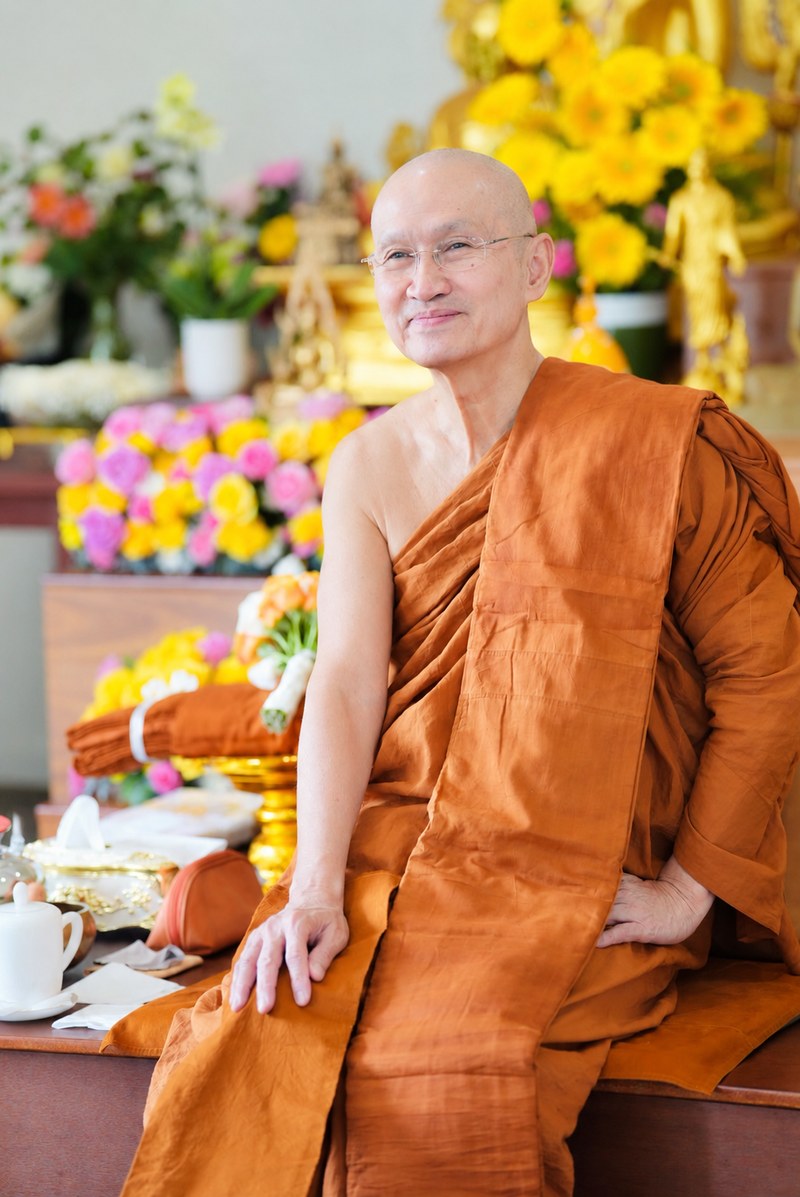 Ajahn Dtun
Death Returns You to the Present
Short TeachingIn this short Dhamma teaching, Venerable Ajahn Dtun offers practical guidance on training the heart through mindfulness, moral discipline, concentration and wisdom. His teachings, rooted in the Thai Forest Tradition and the lineage of Ajahn Chah, repeatedly bring attention back to direct practice: knowing the mind, understanding the causes of suffering, and gradually weakening the greed, anger,…
 00:40
00:40
 Upasika Kee Nanayon
A Clear Stance — Upasikā Kee Nanayon
Short Teaching1 A Clear Stance | Upasikā Kee Nanayon Sometimes in practice, we have to take a clear stance — not a harsh stance, not a stubborn stance, but a firm and honest one. In this short Dhamma reflection, Upasikā Kee Nanayon points us back to sincerity. What are we really living for? What direction is the mind going? Are we following wisdom, or are we being pulled around by craving, fear, and habit? This teaching reminds us that the Dhamma must be brought into daily life, into the heart, and into the choices we make again and again. Subscribe for more Buddhist teachings and Dhamma reflections. #UpasikaKeeNanayon #AClearStance #DhammaReflection #BuddhistTeachings #MeditationPractice #Mindfulness #ThaiForestTradition #Buddhism #Wisdom #InnerPractice #SpiritualPath #Dhamma
 08:44
08:44
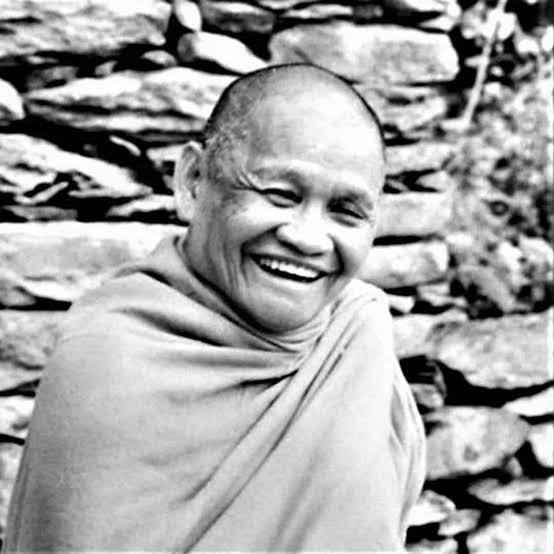 Ajahn Chah
Walking Meditation: Bringing Samādhi into Movement
Selected SectionWalking meditation is not merely a break from sitting. This teaching presents it as a complete form of practice with distinctive strengths of its own. The Buddha praised walking meditation for supporting physical endurance, digestion, readiness for effort, and—most importantly—the development of a kind of samādhi that can be carried more readily into ordinary activity. In the forest tradition, walking meditation may be practiced as much as sitting meditation. The body moves back and forth along a defined path while attention is trained to remain present. Because movement is involved, the meditator must learn steadiness without depending on physical stillness. This makes walking practice a valuable bridge between formal meditation and the changing conditions of daily life. The deeper lesson is that mindfulness should not belong only to a particular posture. If collectedness disappears the moment we stand up, our practice is still dependent on special conditions. Walking meditation trains continuity: awareness accompanies movement, intention, bodily sensation, and the changing rhythm of experience. This section offers a practical reminder for meditators who rely almost entirely on sitting. Walking can refresh energy when the body is tired or dull, while also revealing whether mindfulness can remain established amid activity. The aim is not to perfect an external walking style, but to cultivate a mind that knows what it is doing. As practice matures, sitting and walking support one another. Both become opportunities to develop mindfulness, samādhi, and the clear observation necessary for wisdom.
 08:02
08:02
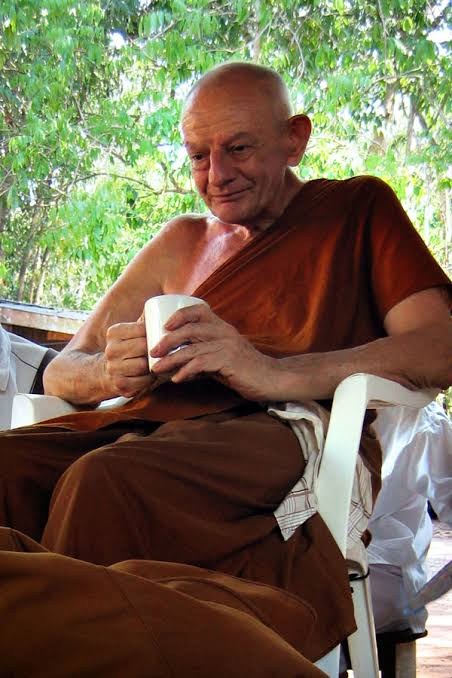 Ajahn Pannavaddho
Why Are We Never Satisfied? | Ajahn Pannavaddho
Selected SectionWhy are human beings continually searching for something more? Even after gaining what we want, satisfaction rarely lasts. Ajahn Pannavaddho explains the fundamental human problem of discontent and shows how Buddhist practice gradually replaces restless searching with calm, wisdom and direct understanding. In this clear teaching on the fundamentals of Buddhism, Ajahn Pannavaddho begins with the problem experienced by every living being: dissatisfaction, suffering and inner disharmony. Whether the problem appears large or small, the mind feels that something is missing and begins searching for a solution. We want objects, experiences, relationships, comfort, recognition or security because we believe they will remove the uncomfortable state within us. Yet once one desire has been satisfied, another soon arises. The search continues because external solutions cannot permanently resolve an internal problem. Ajahn explains that people naturally use cause and effect. When suffering appears, we look for something that might remove it. The difficulty is that without wisdom, we often choose the wrong causes. Actions motivated by ignorance, greed or emotional reaction may promise happiness but instead create greater trouble and suffering. This is why Buddhist practice begins by recognising our actual condition. We must see that discontent is repeatedly present and that the ordinary methods used to cure it are unreliable. People follow whatever feels attractive at the moment, trying one solution after another without understanding the deeper causes operating in the mind. Wisdom does not appear immediately. Until we can clearly see what should and should not be done, we need a dependable guide. Ajahn Pannavaddho explains that this is the purpose of the Buddha’s moral teachings, especially the precepts and the training in restraint. At first, these principles may be accepted through confidence in the Buddha and in those who have practised the path successfully. But Buddhism does not ask us to remain dependent on belief forever. As we practise, we begin to observe the results directly. The mind becomes calmer, less restless and less driven by the endless search for fulfilment in the world. Gradually, faith based on belief is replaced by knowledge based on experience. We begin to understand for ourselves which actions lead toward peace and which actions produce further suffering. This teaching offers a practical introduction to dukkha, craving, ignorance, morality, wisdom and the gradual path from belief to direct understanding. #Dhamma #BuddhistTeachings #Wisdom
 15:07
15:07
Ajahn Chah
Meditation Posture: Stability Without Rigidity
Selected SectionMeditation posture is important, but it is not the essence of meditation. This teaching explains a characteristically practical approach: establish a posture that is stable, upright, and sustainable rather than becoming preoccupied with achieving a perfect external form. In the Theravāda forest tradition, elaborate concern with full lotus, precise hand positions, or an idealized meditation pose is not necessarily emphasized. Bodies differ, flexibility differs, and physical conditions change. The useful criterion is whether the posture supports alertness without creating unnecessary tension or pain. The body should be sufficiently balanced that attention can turn toward the training of the mind. This perspective helps prevent a common mistake: confusing the appearance of meditation with meditation itself. A beautifully arranged posture cannot substitute for mindfulness, restraint, investigation, and the development of samādhi. At the same time, carelessness about posture can lead to sleepiness, discomfort, or agitation. The middle way is to use the body intelligently as a support for practice. For beginners, this section offers reassurance that meditation does not require forcing the body into an unsuitable position. For experienced practitioners, it is a reminder not to let technique become another attachment. Establish the body, know the body, and then attend to the mind. The purpose of posture is functional: to create conditions in which awareness can remain clear and steady. When posture serves that purpose, it has done its job. The real training continues inwardly, where habits of distraction, craving, aversion, and misunderstanding are gradually brought into the light of mindfulness.
 21:37
21:37
Ajahn Dtun
Guard the Mind, Let Go of Suffering
Selected Section🔅 Venerable Ajahn Dtun – The Mind: The Cause of Suffering and the Path to Freedom Venerable Ajahn Dtun, a highly respected meditation master in the Thai Forest Tradition and a senior disciple in the lineage of Ajahn Chah, offers profound guidance on the importance of training the mind through mindfulness and wisdom. In this Dhamma teaching, Ajahn Dtun explains that just as we strengthen the body through physical exercise, we must also train and strengthen the mind through meditation. An untrained mind becomes easily overwhelmed by emotions, desires, and negative thoughts, while a trained mind becomes steady, peaceful, and capable of seeing things clearly. Ajahn Dtun teaches that mindfulness and wisdom are the qualities that protect and guide the mind. When greed, aversion, restlessness, and suffering arise, we should learn to observe them without becoming controlled by them. Through continuous practice, we come to understand that emotions are not the true nature of the mind—they are temporary conditions that arise and pass away. Using the practice of meditation, mindfulness, and wise reflection, Ajahn Dtun encourages practitioners to gradually purify the mind and let go of the causes of suffering. Just as a guard watches over a doorway, mindfulness and wisdom must remain present to protect the mind from unwholesome thoughts while cultivating wholesome qualities. In this teaching, Ajahn Dtun also reminds us of the truth of impermanence. Aging, sickness, and death are unavoidable parts of life. Rather than living with fear, we should use this understanding as motivation to live wisely, cultivate goodness, and make the best use of this precious human life. He encourages us to perform wholesome actions, maintain the precepts, practise meditation, and continuously develop the mind according to the Buddha’s teachings. Through patience, effort, mindfulness, and wisdom, the mind gradually becomes purified, leading towards true peace and freedom. This profound Dhamma reflection reminds us that the greatest journey is not to control the world outside, but to understand and train the mind within. When the mind is wisely cultivated, it becomes not a source of suffering, but the pathway to liberation. May this teaching inspire you to guard your mind, cultivate wisdom, and continue walking the path of inner freedom with patience and dedication. 🔔 Subscribe for more authentic Dhamma teachings 🍃 The Still Path 🍃 #AjahnDtun #Meditation #Mindfulness #Wisdom #ThaiForestTradition #AjahnChah #DhammaTalk #Buddhism #Bhavana #MentalTraining #InnerPeace #Impermanence #TheStillPath
 03:36
03:36
Ajahn Chah
The Mind Is Like a Room With One Chair
Selected SectionAjahn Chah gives a powerful image for mindfulness practice: the mind is like a room with one chair. Whatever enters — thoughts, emotions, anger, fear, desire, doubt, restlessness, or worry — must be known clearly by awareness.
 06:47
06:47
Ajahn Chah
Buddho Meditation: A Simple Anchor for the Mind
Selected SectionThe meditation word “Buddho” can be used as a simple and effective support for collecting the mind. In this teaching, the mantra is coordinated with breathing: “Bud” with the in-breath and “dho” with the out-breath. The repeated recollection gives attention a clear place to return whenever it begins to wander. The value of Buddho is not in mechanical repetition. It is a training device that helps establish continuity of awareness. Breath, mental recitation, and knowing are brought together so that the mind is less easily swept away by thought, memory, planning, and sensory distraction. The mantra may also be used independently of the breath when that is more suitable. As concentration develops, the relationship to the meditation word can change. The point is not to cling permanently to a technique, but to use it skillfully. A support is valuable insofar as it steadies attention and creates the conditions for clearer observation of the mind. When collectedness becomes established, practice can deepen beyond the words themselves. This section is especially useful for meditators who find bare attention to breathing too diffuse or who need a straightforward method for returning from distraction. Buddho provides a rhythm and a reminder: come back, know, and remain present. The teaching also reflects a broader principle of forest practice. Techniques are tools, not ends in themselves. Their worth is measured by what they cultivate—mindfulness, steadiness, reduced distraction, and ultimately the wisdom that understands experience without clinging.
 00:12
00:12
Upasika Kee Nanayon
Without Precepts There Is No Foundation for Purity
Short TeachingWithout the basic order of the precepts, the mind has no firm foundation for purity. Upasika Kee Nanayon reminds us that true spiritual practice begins with restraint, discipline, and sincerity in daily life. A short Dhamma reflection on why morality is not separate from meditation, but the ground from which purity can grow. Hashtags: #UpasikaKeeNanayon #KeeNanayon #DhammaShorts #BuddhistTeachings #Precepts #BuddhistPrecepts #MeditationPractice #DhammaWisdom #SpiritualPurity #MindTraining #Buddhism #ThaiForestTradition #RightConduct #InnerPurity #DhammaReflection
“There’s only two things you have to do in practice: know and let go.”
Ajahn Chah