Faith, awareness, and a life of Dhamma.



Browse by Topic
 00:40
A Clear Stance — Upasikā Kee Nanayon
Upasika Kee Nanayon
 00:12
Without Precepts There Is No Foundation for Purity
Upasika Kee Nanayon
 02:19
Stillness Came Without Force — Upasikā Kee Nanayon
Upasika Kee Nanayon
 00:59
When the Mind Finally Becomes Still
Upasika Kee Nanayon
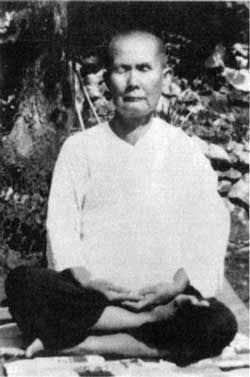
About Upasika Kee Nanayon (1901–1978)
Upasika Kee Nanayon, who also wrote under the pen name Kor Khao-suan-luang, was born in 1901 into a Chinese merchant family in Ratchaburi, a town to the west of Bangkok. She was the eldest of five children, and her mother taught her the rudiments of Buddhist practice, such as nightly chanting and keeping the precepts, from an early age. Her name is also written Upāsikā Kee Nanayon, and her writings also appear under the pen name K. Khao-suan-luang.
She was a laywoman, an upāsikā, rather than a nun. In her youth and early adulthood she ran a small business to support her ageing father, and after his death kept it going to save for a secluded life of practice. In 1945 she gave up the business and moved with her aunt and uncle to Khao Suan Luang, a forested hill outside Ratchaburi. Their small retreat grew into a frugal practice centre for women, and her pen name comes from the place. Largely self-taught, she studied the Pali Canon and other Buddhist writings and tested them in her own practice. Her talks were recorded from the mid-1950s and printed for free distribution, and by the mid-1960s they circulated widely. In later life she lost her sight to cataracts but kept to her meditation schedule. She died in 1978. Her teachings are known in English mainly through the translations of Thanissaro Bhikkhu.
Her teaching is known for its plain, honest focus on direct awareness of the mind, watching mental states arise and pass without becoming entangled in them.
On this site
This site holds a small selection of her teachings, presented as short teachings. They centre on mindfulness, the mind and meditation, with attention to wisdom and virtue. Themes include stillness that comes without force, the mind finally becoming still, taking a clear stance toward experience, and the point that without precepts there is no foundation for purity.
“We have to probe on in and look on our own.”
Upasika Kee Nanayon