About Impermanence
Anicca, impermanence, is the first of the three characteristics the Buddha taught. Everything that arises changes and passes away: bodies, moods, relationships, possessions. Seeing this not merely as an idea but directly, in our own experience, loosens clinging and opens the way to peace.
Ajahn Chah returned to it constantly through the word uncertainty. In Where Is the Buddha? Find Him in Uncertainty he advises bringing that reflection to anything the mind wants to hold as fixed, even ideas about spiritual attainment. He spoke with humour about ageing in Growing Old Without Becoming an ‘Old Child’, where honestly recognising and accepting change is what he calls heedfulness.
Ajahn Dtun draws a careful line between knowing and seeing. In What Are the Knower and the Seer? he points out that everyone knows the body ages and dies, yet the heart still clings to it as me and mine; real seeing depends on the whole training of sīla, samādhi and paññā. His answers on body contemplation and the practice of seeing the body’s unattractive nature show how this seeing matures over time.
The page brings together reflections, life stories and question-and-answer sessions on watching change in daily life and in meditation.
Teachings on Impermanence
28 teachings
Insights from all teachers, across every format, together with related Dhammapada verses.
 06:41
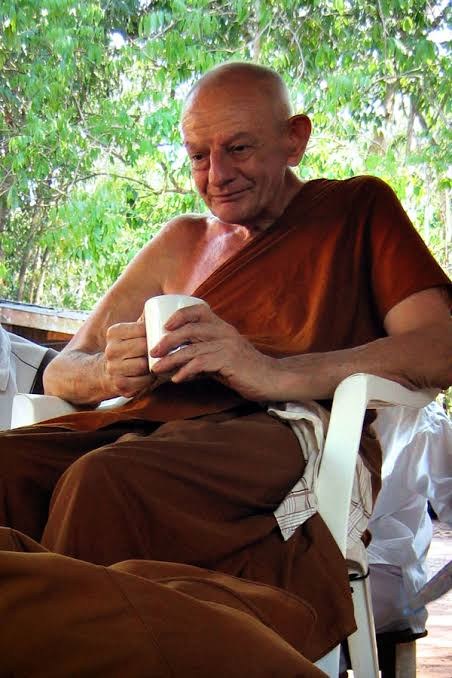 Ajahn Pannavaddho
BUDDHA or GOD | Ajahn Pannavaddho
Question & AnswerDoes Buddhism believe in God, and was the Buddha understood as a divine creator? Ajahn Pannavaddho examines these questions carefully, showing why the meaning of “God” must be clarified before any definite answer can be given. In this thoughtful discussion, Ajahn Pannavaddho begins with a simple comparison. A word such as “chair” refers to something we can point to directly. The word “God,” however, usually refers to an idea that cannot be demonstrated in the same way. Our understanding of God may begin in childhood through parents, culture and religion, then gradually become refined into an inner concept or symbol. The deeper question is whether an independent reality exists that corresponds exactly to that mental symbol. He then considers the idea of a creator. Before asking who created the world, we must first examine what we mean by “the world,” “creation” and even “time.” Because these ideas are difficult to define, Ajahn Pannavaddho explains that it is not easy either to prove or categorically deny the existence of God. His response is not hostile towards Christianity. He acknowledges the value of Christian morality and says that a person who sincerely practises Christianity may become a very good person and reach a heavenly realm. From the Buddhist perspective, however, heaven is not the final goal. Like every conditioned state, heavenly existence is impermanent. It may last for an extraordinarily long time, but eventually it must change. The conversation then turns to the Buddhist understanding of heavenly realms and the kinds of actions that may lead to rebirth there. Ajahn Pannavaddho points to Mother Teresa as an example of a person who performed great good for others. He explains that the person most deeply affected by a good action is the one who performs it, because every intentional action shapes the mind of the doer. This leads directly to the principle of kamma. Our actions are driven by volition, and that volition helps establish the pattern of our future. Goodness is therefore more than an outward performance: it changes the person who acts and influences the direction of future experience. Rather than asking listeners to accept a simple slogan, Ajahn Pannavaddho encourages careful investigation. The important issue is not winning an argument about religious language, but understanding the mind, living morally and taking responsibility for intentional actions. This teaching offers a balanced Buddhist reflection on God, Christianity, heaven, kamma and rebirth, while encouraging thoughtful inquiry rather than argument or dogmatic belief. #Dhamma #BuddhistTeachings #Wisdom
 06:39
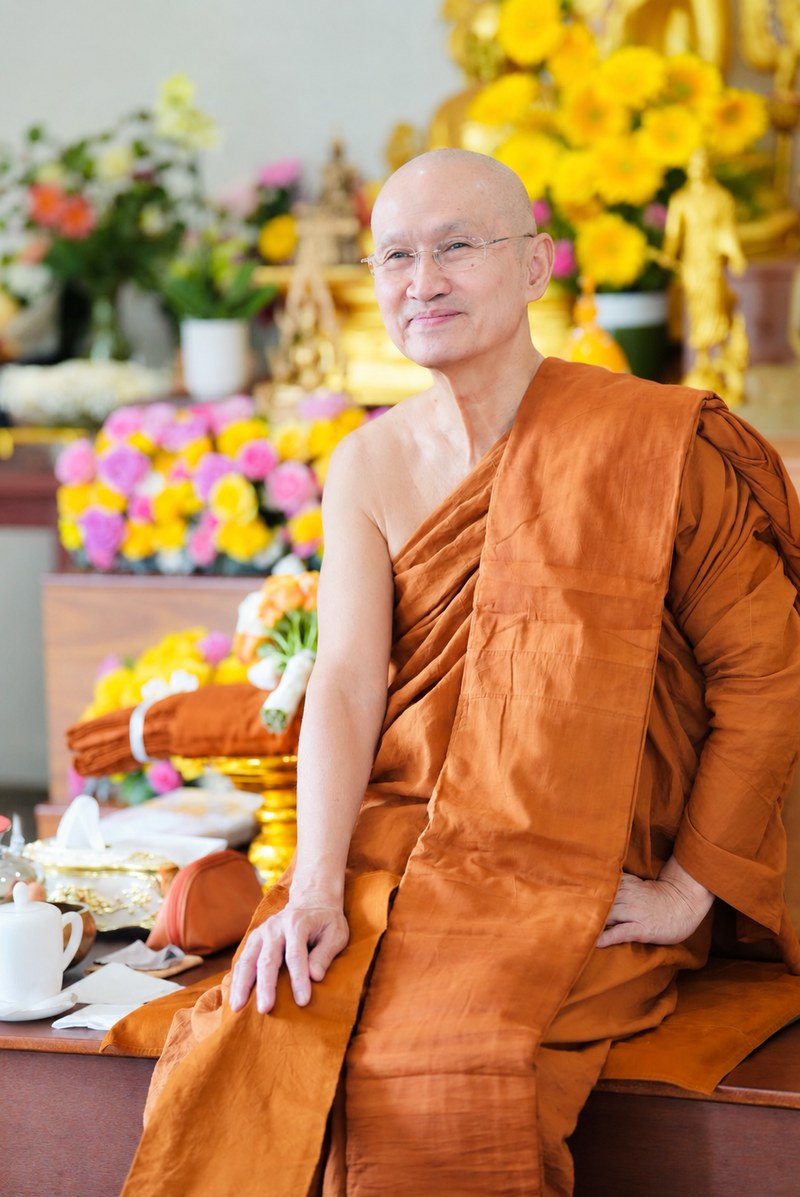 Ajahn Dtun
When Nothing Is Mine, the Mind Is Free!
Selected Section🔅 Venerable Ajahn Dtun – Observing Impermanence: Training the Mind in Everyday Practice Venerable Ajahn Dtun, a respected meditation master in the Thai Forest Tradition and a senior disciple of Ajahn Chah, offers profound guidance on the direct observation of impermanence and the cultivation of insight through daily life. In this teaching, Ajahn Dtun encourages practitioners to carefully observe the changing nature of all experiences—both internal and external. Whether it is a thought, a feeling, a sound, or a physical object, everything arises and passes away according to its nature. By clearly seeing this constant flow of change, the mind begins to develop wisdom and detachment. He explains that this reflection on impermanence (anicca) should not be limited to formal meditation. It can be integrated into everyday life—while seeing objects around us, interacting with people, or experiencing sensory contact such as taste or sound. Each experience, when observed closely, is found to be temporary and ultimately ceases. Ajahn Dtun also highlights that although this understanding is simple in theory, it requires steady practice. A strong foundation in virtue and disciplined living, including keeping the five precepts, supports the development of mindfulness and wisdom. With this foundation, the mind becomes more capable of observing both internal mental states and external phenomena clearly. He further points to the essence of insight (vipassana): seeing everything as impermanent and not-self, leading the mind toward a deeper sense of emptiness—where it no longer clings or identifies with anything in the world. In this way, the teachings of the Buddha are directly realized through experience rather than conceptual understanding. Ajahn Dtun uses the analogy of a journey: even if the destination feels far away, continuous effort—step by step—naturally leads one forward. Likewise, in meditation practice, persistence in developing wholesome qualities gradually leads the practitioner toward liberation. This teaching reminds us that awakening is not achieved through sudden effort alone, but through steady cultivation—continually letting go of what is unwholesome and strengthening what is good. May this Dhamma reflection support your practice of mindfulness, deepen your insight into impermanence, and inspire sincere effort on the path to liberation. 🔔 Subscribe for more Dhamma teachings: 🍃 The Still Path 🍃 #AjahnDtun #Impermanence #Vipassana #Mindfulness #Buddhism #DhammaTalk #ThaiForestTradition #AjahnChahLineage #Meditation #Insight #NonSelf #Nibbana #SpiritualPractice #TheStillPath
 08:30
Ajahn Dtun
How Do Relics Form, and Why Are Ashes Buried?
Question & Answer🔅 Ajahn Dtun – Deep Teachings on Mindfulness, Meditation, and the End of Suffering Ajahn Dtun (Thiracitto) is one of the most respected meditation masters in the Thai Forest Tradition, a senior monk in the lineage of Ajahn Chah, and a teacher renowned for his clarity, stillness, and uncompromising guidance on the path to liberation. His teachings focus on the purification of the mind through mindfulness, disciplined practice, and the steady cultivation of samādhi — the calm concentration that forms the foundation for true insight. With more than four decades of monastic training, Ajahn Dtun offers direct and practical instruction on understanding suffering (dukkha), abandoning unwholesome mental states, developing wisdom, and seeing the impermanent and selfless nature of all experiences. His Dhamma brings meditators back to the essence of the Buddhist path: virtue, restraint, awareness, and the gradual letting go of craving, aversion, and delusion. These teachings serve as a guide for anyone seeking inner peace, mental clarity, and the freedom that arises when the heart is purified. Whether you are beginning meditation or deepening your practice, Ajahn Dtun’s words illuminate the way toward stillness, compassion, and liberation. May these teachings strengthen your mindfulness, deepen your meditation, and support your journey on the Noble Path. 🔔 Subscribe for more Dhamma teachings: Sinerus #AjahnDtun #AjahnChahLineage #ThaiForestTradition #TheravadaBuddhism #Meditation #Mindfulness #InsightMeditation #DhammaTalk #BuddhistWisdom #EndOfSuffering #PurifyTheMind #Samadhi #buddhistmeditation 🍃 How Body Elements Become Relics and the Meaning of Burying Ashes 🍃 How Do Body Elements Turn Into Relics? Ajahn Explains 🍃 Relics and Ashes — What Really Happens After Cremation 🍃 Understanding How Relics Form and Why Ashes Are Buried 🍃 Ajahn’s Teaching on Relics, Ashes, and the Body Elements How Relics Form Ajahn Explains Clearly Relics & Ashes What Really Happens
 12:24
Ajahn Dtun
What Are the Knower and the Seer?
Question & AnswerWhat is the difference between the “knower” and the “seer” in meditation? Venerable Ajahn Dtun answers by shifting attention away from terminology and toward the transformation that actually takes place through practice. Mere knowledge or memory is not yet liberating insight. Everyone can know intellectually that human beings age, become sick and die. We can remember these facts and repeat them correctly, yet the heart may still cling to the body as “me” and “mine.” Ajahn Dtun explains that seeing in the Dhamma sense requires more than information. It depends on the complete training of sīla, samādhi and paññā — moral virtue, concentration and wisdom. When the mind is well grounded in virtue and strengthened by concentration, wisdom can investigate experience deeply enough for attachment to begin falling away. He uses contemplation of the body as an example. When the mind sees, not merely thinks, that the body is impermanent and not-self, attachment and identification are weakened. With continued development, the practitioner sees the same changing nature in one’s own body, in other people and in material things. The point is not to collect a special meditative label, but to change wrong view into right view through direct understanding. Ajahn Dtun also relates this to his own life before ordination. Reflections on ageing, sickness and death made him weary of heedless worldly living and encouraged him to cultivate goodness. Experiences of illness also prompted him to ask why the body could not simply be commanded to remain comfortable and healthy if it were truly under one’s control. Such reflections helped turn ordinary knowledge into a more penetrating investigation of body and mind. For this reason, Ajahn Dtun says he does not place great emphasis on the word “knower.” What people call the knower can still have defilement concealed within it. The important work is to develop the path until wisdom genuinely sees impermanence, unsatisfactoriness and not-self and the heart releases what it once grasped. The distinction is therefore experiential: “knowing” can remain a concept held by a mind that still clings, while “seeing” changes the way the heart relates to what is known. When wisdom truly sees change and non-self, the result is measurable in less attachment, less heedlessness and a stronger inclination toward goodness and release. #AjahnDtun #Knower #Wisdom #Vipassana #Meditation #ThaiForestTradition
 07:34
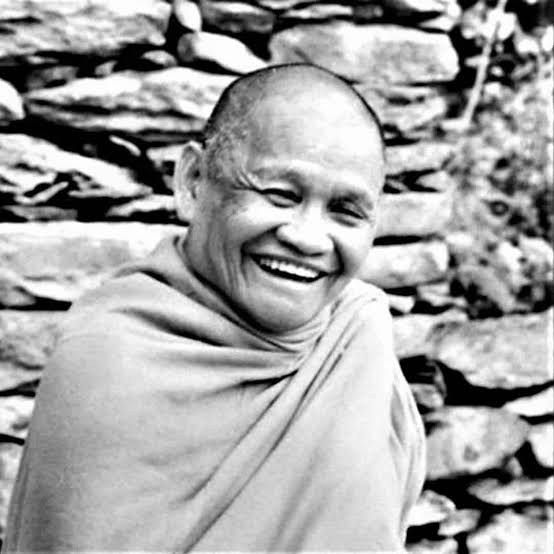 Ajahn Chah
Where Is the Buddha? Find Him in Uncertainty
Selected SectionAjahn Chah turns a devotional question inward: where is the Buddha now? His answer is not to search outwardly for a person or image, but to discover the Dhamma directly through practice. Again and again he returns to one reflection—uncertainty. Whatever the mind wants to grasp as definite, permanent, or finally secure should be examined. Even ideas about spiritual attainment can become objects of attachment. If the mind declares that it has reached a stage or that something is certainly so, Ajahn Chah advises bringing the contemplation of uncertainty to bear. The purpose is not indecision; it is to undermine clinging to conditioned experience as fixed. Pleasant and unpleasant states, progress and difficulty, liking and disliking all arise under changing conditions. Seeing their instability brings the practitioner closer to the Buddha because it brings the mind closer to the truth the Buddha awakened to. Ajahn Chah neither dismisses scriptures and teachers nor makes them the final refuge. Practice must be carried through until the apparent and the transcendent are understood in one’s own experience. Rather than searching for certainty in changing phenomena, the practitioner learns to recognize their unreliable nature. When the mind stops demanding that conditioned things provide lasting security, clinging begins to loosen and Dhamma becomes directly known.
 09:57
Ajahn Chah
Young Love, Loss and the First Great Letting Go
Selected SectionBefore monastic life, the eighteen-year-old who would become Ajahn Chah fell deeply in love. He and a young woman named Jai planned to marry after he had completed national service and spent a rains retreat as a monk. Their families approved, and he imagined an ordinary future of farming, marriage, companionship, and shared work. This episode from Stillness Flowing shows how strongly he once identified with the same hopes that shape ordinary lay life. Yet conditions changed and the future he imagined did not unfold as expected. Love, expectation, disappointment, and loss became part of the human background from which his later renunciation developed. The story naturally illustrates impermanence. The mind can construct a detailed future and emotionally inhabit it long before it exists. When conditions shift, suffering reveals how tightly that imagined future has been held. Ajahn Chah’s later teachings repeatedly returned to this mechanism: we suffer not simply because things change, but because the mind insists that changing things should conform to its expectations. His early romantic attachment gives useful context to the teacher who later spoke so directly about sensual desire and letting go. Renunciation did not come from ignorance of ordinary hopes. He knew attraction, longing, plans, and disappointment personally, and learned that even cherished futures must be allowed to change and pass.
 19:10
Ajahn Dtun
Why Human Life Is a Rare Chance for Liberation
Selected SectionIn this Dhamma teaching, Venerable Ajahn Dtun reflects on the rare opportunity of human birth and the responsibility to use it for genuine spiritual development. The Buddha taught his disciples to know the truths of nature directly: bodies and material things arise, remain for a time, change, break apart, and finally cease. Wisdom begins by learning to see this process without the usual assumption of permanence. Ajahn Dtun describes greed, anger, and delusion as the forces that keep beings wandering through saṃsāra. Although people repeatedly encounter the same kinds of sights, sounds, tastes, possessions, praise, and worldly pleasures, the defilements never feel satisfied. What is old is continually taken to be new, and the search begins again. Human life becomes precious because it offers the capacity to recognize this cycle and train the heart in another direction. The practical path is sīla, samādhi, and paññā—moral virtue, concentration, and wisdom. Good actions and generosity develop pāramī. The precepts prevent behaviour that obstructs spiritual growth. Meditation strengthens the mind, and wisdom investigates the body and experience as impermanent and not-self. Ajahn Dtun warns against allowing unwholesome conduct to interrupt the accumulation of goodness we are trying to build. The lives of the Buddhas and arahant disciples are presented as examples of patient development over many lifetimes. They repeatedly cultivated what was wholesome, endured difficulty without following the defilements, and strengthened the heart until it became capable of complete release. The message is therefore one of urgency without despair: use this human life to grow in goodness now, because time is continually passing. The broader message is that Dhamma is measured by what it changes in the heart. Generosity, restraint, meditation, patience and wisdom are valuable because they weaken the causes of suffering and strengthen wholesome qualities that can be relied upon in difficult conditions. This teaching is relevant to Ajahn Dtun, Thai Forest Buddhism, Buddhist practice, mindfulness, virtue, wisdom, kamma and the gradual training that moves the mind from habitual reaction toward greater freedom. The value of the answer is its simplicity: do not turn the teaching into another object of speculation. Apply it, observe the result in the heart, and continue strengthening whatever qualities are still weak. Over time, repeated practice makes the difference between a principle we merely agree with and a Dhamma that actually changes how we respond to experience. #AjahnDtun #Dhamma #Buddhism #Mindfulness #Wisdom #ThaiForestTradition
 03:07
Ajahn Dtun
What to Do When Practice Feels Discouraging
Question & AnswerA practitioner asks Venerable Ajahn Dtun how to keep faith and effort alive when discouragement appears despite regular practice. Ajahn Dtun’s first point is to examine whether the practice is actually being done correctly and consistently. When the causes are right, some change should gradually become visible in the mind, even if the progress is not dramatic. Discouragement can arise when we expect results too quickly or overlook small improvements. Ajahn Dtun advises looking carefully at the heart. Is there a little more restraint, more awareness, less impulsiveness, or greater ability to recover from difficult emotions? If nothing seems to be changing, that is a reason to review the method rather than simply concluding that practice does not work. He also recommends remembering the enormous effort represented by the Buddha’s path. Awakening was not achieved through comfort or impatience. The development of pāramī required endurance, sacrifice, and persistence. Recollecting this can put our own temporary difficulties into perspective and renew the willingness to continue. Another practical support is contemplation of death. Days, months, and years pass and cannot be recovered. Remembering that the body will eventually break apart brings the mind back to the value of the present day. Instead of regretting yesterday or waiting for a better time next year, do what can be done now. Develop goodness, strengthen the mind, and continue the training while the opportunity is still available. Ajahn Dtun’s guidance turns discouragement into a question: are we willing to keep creating the causes for progress even before the results are obvious? For meditators, the instruction is deliberately practical. Progress depends on repeated training rather than a perfect technique performed once. Establish a workable object, keep returning when the mind moves, and use the calm that develops as a support for mindfulness and wisdom. This teaching is relevant to Buddhist meditation, samādhi, mindfulness, insight practice, the Thai Forest Tradition and anyone trying to make formal practice carry over into ordinary daily life. The value of the answer is its simplicity: do not turn the teaching into another object of speculation. Apply it, observe the result in the heart, and continue strengthening whatever qualities are still weak. Over time, repeated practice makes the difference between a principle we merely agree with and a Dhamma that actually changes how we respond to experience. #AjahnDtun #Meditation #Samadhi #Mindfulness #Dhamma #ThaiForestTradition
 04:30
Ajahn Chah
Growing Old Without Becoming an ‘Old Child’
Selected SectionAjahn Chah speaks candidly—and humorously—about aging. As memory, eyesight, hearing, energy, and physical strength decline, an older person may continue to hold tightly to the authority and certainty of earlier years. The result can be conflict with children and grandchildren. He describes this as becoming an “old child.” A parent who once needed intelligence and decisiveness to raise a family may later refuse to admit mistakes, insist on winning arguments, or become irritated when younger family members offer sensible suggestions. The problem is not simply old age; it is failing to recognize and accept the changes that age brings. Ajahn Chah calls this recognition heedfulness. Look honestly: are the eyes as good as they were? Is memory the same? Is the body as strong? Wisdom begins by acknowledging conditions rather than demanding that life remain as it was. For older practitioners, Dhamma practice can make this stage of life easier for everyone. Mindfulness helps reduce stubbornness, unnecessary conflict, and the creation of new kamma through anger or controlling behaviour. Letting go allows the next generation to carry responsibilities without constant interference. Aging involves loss and change, yet those very changes can become material for practice: contemplate impermanence, relinquish status and control, and cultivate a more peaceful relationship with family.
“Having or not having, it’s all the same. Gain and loss are one.”
Ajahn Chah