About Meditation
Bhāvanā, meditation or mental cultivation, is how the mind is trained to become calm and to see clearly. Samādhi, a steady and collected mind, gives strength to sati (mindfulness) and paññā (wisdom). In the forest tradition, sitting and walking practice is the daily ground on which the rest of the path is built.
Ajahn Chah’s instruction is simple and patient. He taught following the breath without forcing it, sometimes with the word Buddho, and in How to Train the Mind: Samādhi, Craving and the Middle Way he warns that even wanting the mind to be quiet is craving. He likens practice to minding a water buffalo near the rice: let it roam, but keep an eye on it the whole time. Ajahn Maha Boowa, whose early samādhi declined when he rested on it, stresses a firm anchor; Part 2: Why Meditation Needs a Firm Anchor describes driving a stake into the ground and holding on to Buddho.
Ajahn Dtun, heard most often here, places meditation within the whole training of sīla, samādhi and paññā, and answers many practical questions about focus, illness and meditation experiences. Ajahn Plien and Ajahn Jia add other forest voices, from advice on routine and mindfulness to Ajahn Jia’s account of practising in the jungles of Chanthaburi.
Step-by-step instruction sits alongside longer talks, personal accounts and answers to the questions meditators most often ask.
Teachings on Meditation
259 teachings
Insights from all teachers, across every format, together with related Dhammapada verses.

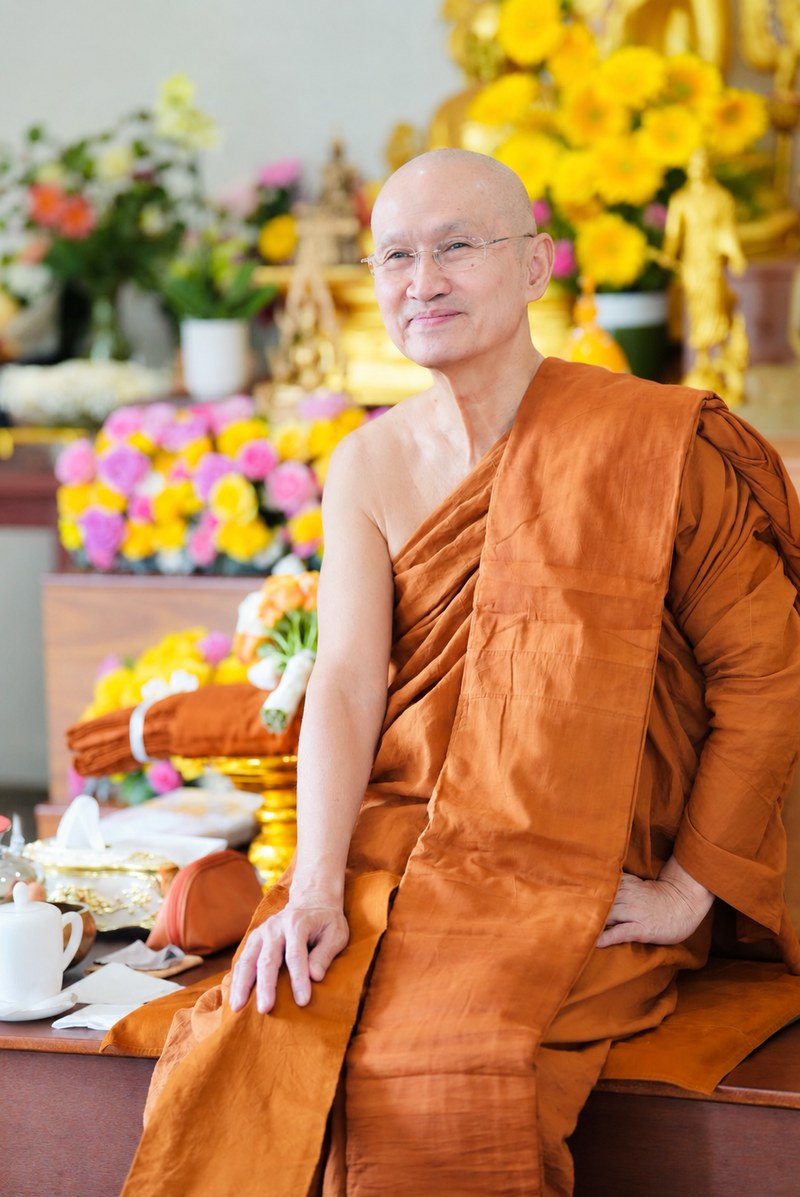 Ajahn Dtun
How to Concentrate for Longer Periods
Question & AnswerIn this teaching, Venerable Ajahn Dtun addresses “How to CONCENTRATE longer period.” The subject is treated as a practical Dhamma question rather than something to settle through theory alone. The focus is on what it means for conduct, meditation, mindfulness and wisdom, and on how the issue can be understood through direct observation of body and mind. The supplied subtitles repeatedly touch on family responsibility, gratitude and the practice of Dhamma in relationships, samādhi, steadiness of mind and the development of concentration, and mindfulness of breathing and the use of the breath to steady attention. The discussion therefore stays close to practice: notice the causes that are present, observe the results they produce, and use the teaching to guide the next wholesome step rather than turning the topic into speculation. The practical emphasis is on training attention patiently rather than chasing unusual states. A meditation object is used to gather the mind, and mindfulness notices when attention has wandered. As steadiness develops, the practitioner can investigate experience with more clarity instead of being carried away by every thought, sensation or mood. For someone practising today, the useful question is not only how to understand how to concentrate longer period, but what can be cultivated now. The response points toward patient repetition: establish wholesome conduct, develop enough steadiness to see clearly, notice attachment when it appears, and use wisdom to understand rather than react automatically. In this way, difficulty itself becomes information about where the training is still weak. This video is relevant to viewers interested in Buddhist meditation, samādhi, mindfulness, breath meditation, Buddho, walking meditation and insight practice. Ajahn Dtun’s approach is direct and practice-centred. Buddhist terminology matters only insofar as it helps the practitioner restrain what causes harm, strengthen mindfulness, develop concentration where needed, and investigate conditions until the heart becomes less identified with what is changing. The broader message is gradual training. Progress is seen in a mind that is more honest, more stable and less easily pulled by greed, aversion, fear or confusion. Repeated practice turns a teaching from something merely understood in words into a Dhamma that changes how experience is met and how quickly the heart can let go. The teaching also encourages continuity. Rather than waiting for ideal conditions, keep creating the causes for clarity in ordinary life as well as formal meditation. What is repeatedly practised becomes stronger, and that accumulated strength is what allows mindfulness and wisdom to work when a difficult situation actually arrives. #AjahnDtun #Dhamma #Meditation #Samadhi #Mindfulness #ThaiForestTradition
 01:47
 Ajahn Chah
Part 10: Meditation Reveals the Hindrances
Short TeachingAjahn Chah teaches that meditation reveals the hidden habits of the mind. Hindrances, moods, distractions, mental habits, craving, anger, and confusion were already there — meditation simply makes them visible so they can be trained wisely.
 01:02
Ajahn Dtun
See the Body as a Corpse
Short TeachingIn this short Dhamma teaching, Venerable Ajahn Dtun offers practical guidance on training the heart through mindfulness, moral discipline, concentration and wisdom. His teachings, rooted in the Thai Forest Tradition and the lineage of Ajahn Chah, repeatedly bring attention back to direct practice: knowing the mind, understanding the causes of suffering, and gradually weakening the greed, anger,…
 06:44
 Ajahn Pannavaddho
Why Worldly Pleasure Never Satisfies the Mind
Selected SectionWhy does the mind remain restless even after receiving what it wants? Ajahn Pannavaddho explains how uncontrolled thoughts create suffering, why worldly pleasures provide only temporary satisfaction, and how morality and meditation prepare the mind for genuine wisdom.
 24:39
Ajahn Chah
Ajahn Chah on Sensual Desire: Understanding the First Hindrance
Selected SectionSensual desire is not limited to sexual craving. In this teaching, the first of the five hindrances is examined as the mind’s tendency to turn toward remembered, imagined, or anticipated pleasures whenever meditation does not immediately satisfy it. Food, comfort, attractive sights, sounds, memories, fantasies, and other forms of sense pleasure can all become places where attention seeks warmth and distraction. The teaching is practical because it asks the meditator to recognize the movement of the mind rather than merely condemn desire. Sensual thoughts become an obstacle when they occupy attention, feed attachment, and prevent the mind from settling sufficiently for samādhi and insight. Seeing this process clearly is already part of the training: mindfulness reveals what the mind is reaching for, while restraint and wise reflection weaken the habit of automatically following it. This section belongs to a larger presentation of meditation practice and the hindrances. Its emphasis is not on suppressing experience by force, but on understanding why sensual attraction gains power and how practice gradually reduces that power. As interest in Dhamma deepens, the meditator learns to recognize the difference between temporary gratification and the more stable peace that comes from a mind less dependent on sensory stimulation. A useful reflection for anyone who finds meditation repeatedly pulled toward pleasant memories, plans, food, relationships, entertainment, or fantasy. The central question is simple: when the mind leaves the present moment in search of pleasure, can we see that movement clearly enough not to be carried away by it?
 00:19
Ajahn Chah
If you want to wait for the future Buddha, don't practice
Short TeachingThese short reflections draw on the timeless teachings associated with Venerable Ajahn Chah, one of the most influential meditation masters of the Thai Forest Tradition. His teachings continually point us back to the most important place of practice — our own mind.
 05:33
Ajahn Chah
Why Happiness Still Bites | Ajahn Chah
Selected SectionWhy would Ajahn Chah compare happiness and suffering to two ends of the same snake? In this striking Dhamma teaching, Venerable Ajahn Chah explains the Middle Way and why genuine peace is found neither in chasing happiness nor in resisting suffering. The Buddha taught us to abandon what is unwholesome and cultivate what is wholesome. But Ajahn Chah points to a deeper stage of practice: eventually, the mind must learn to let go of attachment to both good and bad, pleasure and pain, happiness and unhappiness. These are the two extremes that keep beings circling within saṃsāra. Ajahn Chah gives a memorable analogy. Imagine a poisonous snake. The head represents unhappiness and suffering. Naturally, we recognise the head as dangerous because it can bite. But the tail represents happiness. We may think the tail is safe and grasp it eagerly. Yet the tail belongs to the very same snake. Hold onto it long enough and the snake turns around and bites. In the same way, happiness contains the conditions for suffering because the mind immediately begins to cling to what it enjoys. We acquire wealth, praise, status, comfort, or something we deeply want — and then fear appears because we may lose it. Even while we are happy, attachment has already disturbed the mind. Ajahn Chah explains that both happiness and unhappiness arise from the same parent: wanting. The Middle Way therefore does not mean finding a comfortable point halfway between pleasure and pain. It concerns the mind itself — learning not to be carried away by either attraction or aversion. The Buddha established morality, concentration, and wisdom as the path — magga — leading toward peace. Yet Ajahn Chah says these practices are the path, not the final essence itself. The essence is peace arising from truly understanding the nature of things. That peace is neither happiness nor unhappiness. It is the mind no longer being shaken and dragged around by changing mental impressions. Ajahn Chah’s message is simple but radical: Don’t merely run away from the snake’s head while clinging tightly to its tail. Let go of both. #AjahnChah #Dhamma #MiddleWay #Meditation #BuddhistTeachings #Mindfulness #Buddhism
 05:20
Ajahn Chah
The Five Hindrances: What Blocks Samādhi and Insight
Selected SectionThe Buddha described five recurring mental obstacles that obstruct the development of samādhi and wisdom: sensual desire, ill will, sloth and torpor, agitation accompanied by guilt or remorse, and doubt or indecision. This teaching introduces those five hindrances as more than a list to memorize. They are conditions of mind that cloud perception and make it difficult to see experience clearly. For a meditator, learning to recognize the hindrances is essential. A mind absorbed in attraction cannot settle. A mind burning with aversion cannot see impartially. Dullness removes energy and clarity, restlessness prevents collectedness, and doubt can keep practice suspended in continual uncertainty. The problem is therefore not simply that these states feel unpleasant; they interfere directly with the qualities needed for insight. The teaching points toward an important change in attitude. Instead of assuming that difficulty in meditation means the practice has failed, the meditator learns to identify the condition presently dominating the mind. Once named and known, it can be investigated. What feeds it? What happens when it is indulged? What weakens it? This turns an obstacle into material for practice. This section is particularly useful as a foundation for anyone developing mindfulness and concentration. It places common meditation difficulties within the Buddha’s systematic training and shows why dealing with the hindrances is inseparable from developing wisdom. Clear seeing begins by recognizing what prevents clear seeing. When these obstructions weaken, the mind becomes more workable, steady, and capable of understanding things as they actually are.
 38:39
Ajahn Dtun
The Roadmap to Enlightenment
Complete Talk🔅 What is the correct path leading from ordinary goodness towards genuine awakening? In this detailed Buddhist teaching, Venerable Ajahn Dtun explains the progressive training of the mind through virtue, concentration and wisdom, and how these three qualities work together on the path towards enlightenment. The foundation of Buddhist practice begins with confidence in the Buddha’s enlightenment and trust in the law of kamma. When people understand that wholesome actions bring beneficial results and harmful actions bring suffering, they naturally become more careful about their behaviour. Generosity and keeping the moral precepts make a person good, but Ajahn Dtun explains that moral conduct alone is not yet sufficient for entering the noble path. Sīla brings bodily actions and speech under control. Samādhi then trains the mind to become peaceful, stable and concentrated. At first, meditation may sometimes be peaceful and sometimes restless. This is normal. Even the ability to enter deep concentration, however, does not by itself constitute the path to awakening. The complete path requires sīla, samādhi and paññā to be present and functioning together. With a peaceful mind as the foundation, mindfulness and wisdom investigate greed, anger, attachment and suffering. The practitioner repeatedly contemplates the body to see its impermanence and absence of a permanent self. Attachment to the body is not abandoned merely through intellectual understanding. The truth must be seen clearly within the heart through consistent practice. Ajahn Dtun describes the stages of realization as a gradual journey. The stream-enterer weakens the coarsest level of attachment. The once-returner continues along the same path, further reducing greed, aversion and identification with the body. The non-returner develops stronger virtue, deeper concentration and more refined wisdom until attachment to the body, sensuality and material things is brought to an end. He compares practice to constructing a wall one brick at a time. Each brick represents continuing effort along the path. He also compares it to travelling from one town to another: travelling is the path, while arriving at the destination is the fruit. Learning the roadmap is not enough. We must walk it ourselves. Many people may speak about the way to liberation, but only one who truly knows the correct path can guide others safely. Practise sīla, samādhi and paññā patiently. Rest when necessary, regain your strength and continue travelling until the destination is reached. Australia 2026 #AjahnDtun #AjahnChahLineage #ThaiForestTradition #TheravadaBuddhism #Meditation #Mindfulness #InsightMeditation #DhammaTalk #BuddhistWisdom #EndOfSuffering #PurifyTheMind #Samadhi #BuddhistMeditation
“The path is none other than sīla, samādhi and paññā.”
Ajahn Dtun