About Nibbāna
Nibbāna is the goal of the Buddha’s path: the complete ending of greed, hatred and delusion, and so the end of suffering. It is described more by what ceases than by what is gained, and the forest teachers speak of it with restraint, pointing the listener back to the practice that leads there rather than to speculation.
Some of the most striking teachings here are first-hand accounts. In The Moment Ignorance Was Destroyed | A Firsthand Account of Nibbāna, Ajahn Jia describes practising in a cave in malaria country in 1949, distrusting a free, soaring feeling until awareness let go of body and mind. Ajahn Maha Boowa tells in Pain Could No Longer Touch His Mind how, investigating body, pain and the knowing citta as separate things, he saw that it was the citta that labelled the feeling as painful.
Ajahn Dtun, whose talks form most of this page, maps the way from stream entry to arahantship, explaining the difference between path and fruit (magga and phala), the refined defilements, and why unusual meditative abilities are not the goal. He is steadily encouraging about human birth as an opportunity, as in Why Human Life Is a Rare Chance for Liberation.
Expect talks on the stages of awakening, personal accounts from forest masters and careful answers to subtle questions about the end of the path.
Teachings on Nibbāna
70 teachings
Insights from all teachers, across every format, together with related Dhammapada verses.
 00:48
 Ajahn Maha Boowa
Pain Means Nothing to the Citta — Ajahn Maha Boowa
Selected SectionAjahn Mahā Boowa explains that painful feelings do not create suffering by themselves. Only when the citta gives them personal meaning does suffering arise. Ajahn Maha Boowa’s Direct Route to Nibbana presents a profound series of Thai Forest Dhamma teachings on the complete path from basic meditation to final liberation. Based on Arahattamagga, Arahattaphala, and Nibbana, these talks explain how mindfulness, samadhi, wisdom, and determined investigation gradually free the heart from suffering, attachment, ignorance, and the cycle of birth and death. Throughout the series, Ajahn Maha Boowa gives practical guidance on Buddho meditation, concentration, mindfulness of the body, contemplation of pain, fear of death, the five khandhas, impermanence, suffering, not-self, and the nature of the citta. He shows how meditators can separate pain, body, feeling, memory, thought, and awareness, so that experience is understood clearly rather than grasped as “me” or “mine.” The teachings examine body contemplation in depth, including the illusion of beauty, attachment to form, decay, unattractiveness, and the point at which body images finally cease. Ajahn Maha Boowa also warns that deep samadhi, radiant awareness, peaceful meditation states, and subtle knowing are not yet Nibbana. Even the luminous citta must be investigated until avijja, the final root of delusion, is completely destroyed. Later sections describe the falling away of duality, the end of attachment, the appearance of supreme Dhamma, and the direct realization of Nibbana. The series also explores kamma, rebirth, heaven and hell, compassion, teaching the Dhamma, the nature of an arahant, and why pure Dhamma remains untouched by praise, blame, argument, or misunderstanding. These teachings are especially valuable for serious practitioners of Theravada Buddhism, vipassana meditation, samatha meditation, mindfulness, body contemplation, insight practice, and the Thai Forest Tradition. They are suitable for meditators who want to understand the deeper stages of the path beyond temporary calm, spiritual experiences, or intellectual knowledge. Students of Buddhism will find explanations of advanced meditation without losing the practical foundation: morality, restraint, mindfulness, persistence, and wise investigation. Each video forms part of one continuous journey from ordinary suffering to awakening, arahantship, and unshakeable inner peace. The Direct Route to Nibbana is not a promise of quick enlightenment. It is a call to practise with courage, patience, honesty, and total commitment. Ajahn Maha Boowa repeatedly directs attention back to immediate experience, where suffering arises and where wisdom can cut through attachment. Listen carefully, reflect deeply, and apply these teachings in meditation and daily life as a guide toward dispassion, freedom, and the complete end of suffering. #AjahnMahaBoowa #Nibbana #Dhamma #Meditation #ThaiForestTradition #TheravadaBuddhism #Vipassana #Samadhi #BuddhistTeachings #Dhamma #BuddhistTeachings #Wisdom
 00:30
 Ajahn Chah
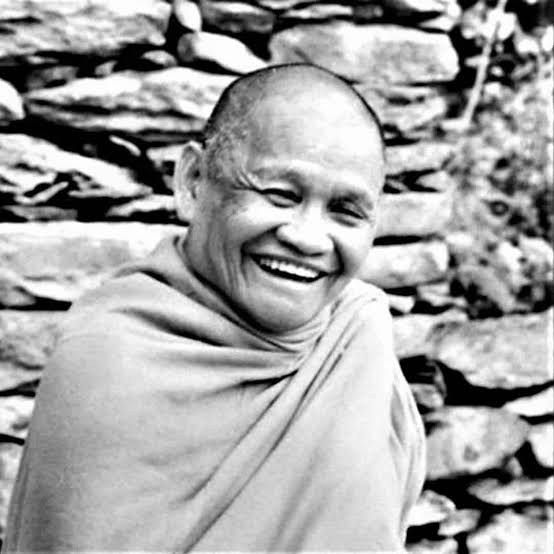
This Is the Finish — Ajahn Chah on Complete Letting Go
Short Teaching## Description Ajahn Chah explains where the Buddhist path ultimately leads: not to gaining something new, but to letting go completely. The practice of Dhamma gradually teaches us to stop clinging to the body, feelings, thoughts, views, and the constant desire for things to be different. When attachment is abandoned, the burden we have carried begins to fall away. This is the meaning of surrender and emptiness in Buddhist practice — not hopelessness or nothingness, but freedom from the need to grasp and possess. In this short reflection, Ajahn Chah points directly to the completion of the path: when there is nothing left to hold onto, there is nothing left to burden the heart. A simple but profound teaching on letting go, non-attachment, inner peace, and the purpose of Dhamma practice. — Ajahn Chah From *No Ajahn Chah: Reflections*, compiled and edited by Dhamma Garden. Reflection No. 25, from the section on Dhamma. Following Ajahn Chah’s wish that his Dhamma teachings not be sold in any way or form, this book is published for free distribution only. #AjahnChah #Dhamma #Buddhism #LettingGo #Meditation #NonAttachment #ThaiForestTradition #BuddhistTeachings #Shorts
 07:27
 Ajahn Dtun
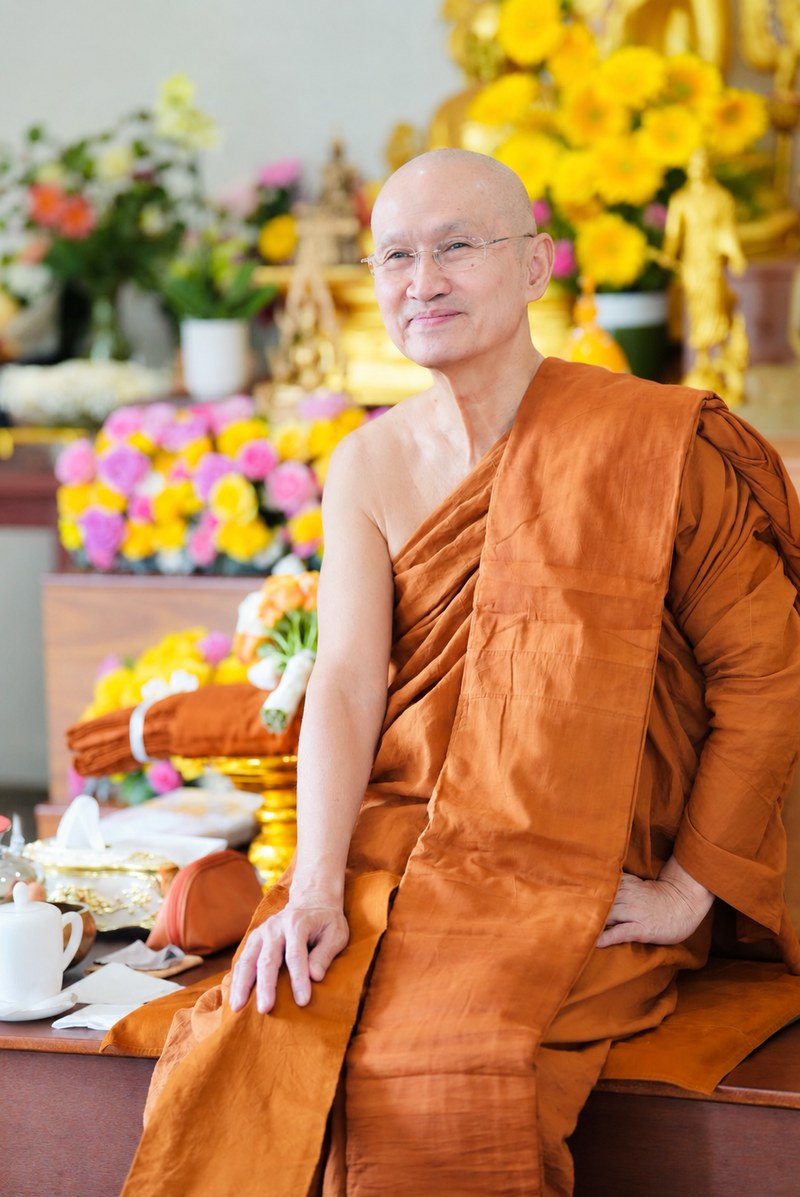
Should You Reach Stream-Entry Before Starting a Family?
Question & AnswerShould a Buddhist practitioner attain stream-entry before getting married or starting a family? In this personal Dhamma teaching, Venerable Ajahn Dtun responds to a question about family life, children, spiritual practice, and whether household responsibilities can become an obstacle on the path. Ajahn Dtun explains that the desire to have a family depends upon each individual. Family life naturally brings additional responsibilities. When we live alone, we mainly care for ourselves. With a partner, both people must care for one another, and when children arrive, the responsibilities become greater still. The questioner wonders whether it would therefore be better to develop the mind to a certain spiritual level—perhaps stream-entry—before beginning family life. Ajahn Dtun points out an important difficulty with this idea: we cannot decide in advance exactly when a particular stage of awakening will occur. Stream-entry does not arise simply because we wish to attain it by a certain time. We must create the causes through sincere practice and allow the mind to develop according to its accumulated pāramī and spiritual faculties. Even monastics may practise for an entire lifetime without attaining a particular noble stage, while nevertheless developing valuable spiritual qualities that support future progress. Ajahn Dtun then shares his own experience. As a young layman, he originally expected to finish his studies, work, and eventually have a family. But the causes and conditions of his life changed. His interest in worldly life gradually fell away, and his aspiration turned increasingly towards freedom from suffering. When he ordained, he made a strong determination to dedicate his entire life to practice without demanding that a particular attainment occur within a particular timeframe. His approach was simple: continue practising for as long as necessary. The teaching reminds us that spiritual progress cannot be scheduled. Whether living as a householder or monastic, what matters is continually developing virtue, concentration, wisdom, and the causes that lead the heart towards liberation.
 14:16
Ajahn Maha Boowa
Pain Could No Longer Touch His Mind | Ajahn Mahā Boowa
Selected SectionAjahn Mahā Boowa describes a decisive night of meditation, where severe pain became the doorway to seeing body, feeling, and citta as separate realities. Ajahn Maha Boowa’s Direct Route to Nibbana presents a profound series of Thai Forest Dhamma teachings on the complete path from basic meditation to final liberation. Based on Arahattamagga, Arahattaphala, and Nibbana, these talks explain how mindfulness, samadhi, wisdom, and determined investigation gradually free the heart from suffering, attachment, ignorance, and the cycle of birth and death. Throughout the series, Ajahn Maha Boowa gives practical guidance on Buddho meditation, concentration, mindfulness of the body, contemplation of pain, fear of death, the five khandhas, impermanence, suffering, not-self, and the nature of the citta. He shows how meditators can separate pain, body, feeling, memory, thought, and awareness, so that experience is understood clearly rather than grasped as “me” or “mine.” The teachings examine body contemplation in depth, including the illusion of beauty, attachment to form, decay, unattractiveness, and the point at which body images finally cease. Ajahn Maha Boowa also warns that deep samadhi, radiant awareness, peaceful meditation states, and subtle knowing are not yet Nibbana. Even the luminous citta must be investigated until avijja, the final root of delusion, is completely destroyed. Later sections describe the falling away of duality, the end of attachment, the appearance of supreme Dhamma, and the direct realization of Nibbana. The series also explores kamma, rebirth, heaven and hell, compassion, teaching the Dhamma, the nature of an arahant, and why pure Dhamma remains untouched by praise, blame, argument, or misunderstanding. These teachings are especially valuable for serious practitioners of Theravada Buddhism, vipassana meditation, samatha meditation, mindfulness, body contemplation, insight practice, and the Thai Forest Tradition. They are suitable for meditators who want to understand the deeper stages of the path beyond temporary calm, spiritual experiences, or intellectual knowledge. Students of Buddhism will find explanations of advanced meditation without losing the practical foundation: morality, restraint, mindfulness, persistence, and wise investigation. Each video forms part of one continuous journey from ordinary suffering to awakening, arahantship, and unshakeable inner peace. The Direct Route to Nibbana is not a promise of quick enlightenment. It is a call to practise with courage, patience, honesty, and total commitment. Ajahn Maha Boowa repeatedly directs attention back to immediate experience, where suffering arises and where wisdom can cut through attachment. Listen carefully, reflect deeply, and apply these teachings in meditation and daily life as a guide toward dispassion, freedom, and the complete end of suffering. #AjahnMahaBoowa #Nibbana #Dhamma #Meditation #ThaiForestTradition #TheravadaBuddhism #Vipassana #Samadhi #BuddhistTeachings #Dhamma #BuddhistTeachings #Wisdom
 02:59
Ajahn Maha Boowa
Continuous Samādhi Can Become a Trap — Ajahn Maha Boowa
Selected SectionAjahn Maha Boowa’s Direct Route to Nibbana presents a profound series of Thai Forest Dhamma teachings on the complete path from basic meditation to final liberation. Based on Arahattamagga, Arahattaphala, and Nibbana, these talks explain how mindfulness, samadhi, wisdom, and determined investigation gradually free the heart from suffering, attachment, ignorance, and the cycle of birth and death. Throughout the series, Ajahn Maha Boowa gives practical guidance on Buddho meditation, concentration, mindfulness of the body, contemplation of pain, fear of death, the five khandhas, impermanence, suffering, not-self, and the nature of the citta. He shows how meditators can separate pain, body, feeling, memory, thought, and awareness, so that experience is understood clearly rather than grasped as “me” or “mine.” The teachings examine body contemplation in depth, including the illusion of beauty, attachment to form, decay, unattractiveness, and the point at which body images finally cease. Ajahn Maha Boowa also warns that deep samadhi, radiant awareness, peaceful meditation states, and subtle knowing are not yet Nibbana. Even the luminous citta must be investigated until avijja, the final root of delusion, is completely destroyed. Later sections describe the falling away of duality, the end of attachment, the appearance of supreme Dhamma, and the direct realization of Nibbana. The series also explores kamma, rebirth, heaven and hell, compassion, teaching the Dhamma, the nature of an arahant, and why pure Dhamma remains untouched by praise, blame, argument, or misunderstanding. These teachings are especially valuable for serious practitioners of Theravada Buddhism, vipassana meditation, samatha meditation, mindfulness, body contemplation, insight practice, and the Thai Forest Tradition. They are suitable for meditators who want to understand the deeper stages of the path beyond temporary calm, spiritual experiences, or intellectual knowledge. Students of Buddhism will find explanations of advanced meditation without losing the practical foundation: morality, restraint, mindfulness, persistence, and wise investigation. Each video forms part of one continuous journey from ordinary suffering to awakening, arahantship, and unshakeable inner peace. The Direct Route to Nibbana is not a promise of quick enlightenment. It is a call to practise with courage, patience, honesty, and total commitment. Ajahn Maha Boowa repeatedly directs attention back to immediate experience, where suffering arises and where wisdom can cut through attachment. Listen carefully, reflect deeply, and apply these teachings in meditation and daily life as a guide toward dispassion, freedom, and the complete end of suffering. #AjahnMahaBoowa #Nibbana #Dhamma #Meditation #ThaiForestTradition #TheravadaBuddhism #Vipassana #Samadhi #BuddhistTeachingsn
 00:48
Ajahn Dtun
The Direct Way to Stream Entry
Short TeachingVenerable Ajahn Dtun explains the direct understanding that leads toward stream-entry: seeing clearly that the body is not the mind, and the mind is not the body. When this view becomes correct, attachment begins to weaken, and the heart starts to let go. 🔔 Subscribe for more Dhamma teachings: Sinerus #AjahnDtun #AjahnChahLineage #ThaiForestTradition #TheravadaBuddhism #Meditation #Mindfulness #InsightMeditation #DhammaTalk #BuddhistWisdom #EndOfSuffering #PurifyTheMind #Samadhi #BuddhistMeditation
 09:00
Ajahn Maha Boowa
Part 3: When Buddho Disappears | Ajahn Mahā Boowa
Selected SectionAjahn Mahā Boowa explains how steady Buddho meditation can gather the mind into deep calm, until the meditation word and the citta become one knowing presence. Ajahn Maha Boowa’s Direct Route to Nibbana presents a profound series of Thai Forest Dhamma teachings on the complete path from basic meditation to final liberation. Based on Arahattamagga, Arahattaphala, and Nibbana, these talks explain how mindfulness, samadhi, wisdom, and determined investigation gradually free the heart from suffering, attachment, ignorance, and the cycle of birth and death. Throughout the series, Ajahn Maha Boowa gives practical guidance on Buddho meditation, concentration, mindfulness of the body, contemplation of pain, fear of death, the five khandhas, impermanence, suffering, not-self, and the nature of the citta. He shows how meditators can separate pain, body, feeling, memory, thought, and awareness, so that experience is understood clearly rather than grasped as “me” or “mine.” The teachings examine body contemplation in depth, including the illusion of beauty, attachment to form, decay, unattractiveness, and the point at which body images finally cease. Ajahn Maha Boowa also warns that deep samadhi, radiant awareness, peaceful meditation states, and subtle knowing are not yet Nibbana. Even the luminous citta must be investigated until avijja, the final root of delusion, is completely destroyed. Later sections describe the falling away of duality, the end of attachment, the appearance of supreme Dhamma, and the direct realization of Nibbana. The series also explores kamma, rebirth, heaven and hell, compassion, teaching the Dhamma, the nature of an arahant, and why pure Dhamma remains untouched by praise, blame, argument, or misunderstanding. These teachings are especially valuable for serious practitioners of Theravada Buddhism, vipassana meditation, samatha meditation, mindfulness, body contemplation, insight practice, and the Thai Forest Tradition. They are suitable for meditators who want to understand the deeper stages of the path beyond temporary calm, spiritual experiences, or intellectual knowledge. Students of Buddhism will find explanations of advanced meditation without losing the practical foundation: morality, restraint, mindfulness, persistence, and wise investigation. Each video forms part of one continuous journey from ordinary suffering to awakening, arahantship, and unshakeable inner peace. The Direct Route to Nibbana is not a promise of quick enlightenment. It is a call to practise with courage, patience, honesty, and total commitment. Ajahn Maha Boowa repeatedly directs attention back to immediate experience, where suffering arises and where wisdom can cut through attachment. Listen carefully, reflect deeply, and apply these teachings in meditation and daily life as a guide toward dispassion, freedom, and the complete end of suffering. #AjahnMahaBoowa #Nibbana #Dhamma #Meditation #ThaiForestTradition #TheravadaBuddhism #Vipassana #Samadhi #BuddhistTeachings #Dhamma #BuddhistTeachings #Wisdom
 09:08
Ajahn Maha Boowa
Part 2: Why Meditation Needs a Firm Anchor | Ajahn Mahā Boowa
Selected SectionAjahn Mahā Boowa explains why meditation needs a firm anchor, and how the steady repetition of Buddho protects the mind from distraction, uncertainty, and decline in practice. Ajahn Maha Boowa’s Direct Route to Nibbana presents a profound series of Thai Forest Dhamma teachings on the complete path from basic meditation to final liberation. Based on Arahattamagga, Arahattaphala, and Nibbana, these talks explain how mindfulness, samadhi, wisdom, and determined investigation gradually free the heart from suffering, attachment, ignorance, and the cycle of birth and death. Throughout the series, Ajahn Maha Boowa gives practical guidance on Buddho meditation, concentration, mindfulness of the body, contemplation of pain, fear of death, the five khandhas, impermanence, suffering, not-self, and the nature of the citta. He shows how meditators can separate pain, body, feeling, memory, thought, and awareness, so that experience is understood clearly rather than grasped as “me” or “mine.” The teachings examine body contemplation in depth, including the illusion of beauty, attachment to form, decay, unattractiveness, and the point at which body images finally cease. Ajahn Maha Boowa also warns that deep samadhi, radiant awareness, peaceful meditation states, and subtle knowing are not yet Nibbana. Even the luminous citta must be investigated until avijja, the final root of delusion, is completely destroyed. Later sections describe the falling away of duality, the end of attachment, the appearance of supreme Dhamma, and the direct realization of Nibbana. The series also explores kamma, rebirth, heaven and hell, compassion, teaching the Dhamma, the nature of an arahant, and why pure Dhamma remains untouched by praise, blame, argument, or misunderstanding. These teachings are especially valuable for serious practitioners of Theravada Buddhism, vipassana meditation, samatha meditation, mindfulness, body contemplation, insight practice, and the Thai Forest Tradition. They are suitable for meditators who want to understand the deeper stages of the path beyond temporary calm, spiritual experiences, or intellectual knowledge. Students of Buddhism will find explanations of advanced meditation without losing the practical foundation: morality, restraint, mindfulness, persistence, and wise investigation. Each video forms part of one continuous journey from ordinary suffering to awakening, arahantship, and unshakeable inner peace. The Direct Route to Nibbana is not a promise of quick enlightenment. It is a call to practise with courage, patience, honesty, and total commitment. Ajahn Maha Boowa repeatedly directs attention back to immediate experience, where suffering arises and where wisdom can cut through attachment. Listen carefully, reflect deeply, and apply these teachings in meditation and daily life as a guide toward dispassion, freedom, and the complete end of suffering. #AjahnMahaBoowa #Nibbana #Dhamma #Meditation #ThaiForestTradition #TheravadaBuddhism #Vipassana #Samadhi #BuddhistTeachings #Dhamma #BuddhistTeachings #Wisdom
 03:43
Ajahn Maha Boowa
Why We Still Suffer — Ajahn Maha Boowa
Selected SectionAjahn Mahā Boowa warns that Buddhism can become only words when true practice is lost, and shows why mindfulness must keep watch over the mind. Ajahn Maha Boowa’s Direct Route to Nibbana presents a profound series of Thai Forest Dhamma teachings on the complete path from basic meditation to final liberation. Based on Arahattamagga, Arahattaphala, and Nibbana, these talks explain how mindfulness, samadhi, wisdom, and determined investigation gradually free the heart from suffering, attachment, ignorance, and the cycle of birth and death. Throughout the series, Ajahn Maha Boowa gives practical guidance on Buddho meditation, concentration, mindfulness of the body, contemplation of pain, fear of death, the five khandhas, impermanence, suffering, not-self, and the nature of the citta. He shows how meditators can separate pain, body, feeling, memory, thought, and awareness, so that experience is understood clearly rather than grasped as “me” or “mine.” The teachings examine body contemplation in depth, including the illusion of beauty, attachment to form, decay, unattractiveness, and the point at which body images finally cease. Ajahn Maha Boowa also warns that deep samadhi, radiant awareness, peaceful meditation states, and subtle knowing are not yet Nibbana. Even the luminous citta must be investigated until avijja, the final root of delusion, is completely destroyed. Later sections describe the falling away of duality, the end of attachment, the appearance of supreme Dhamma, and the direct realization of Nibbana. The series also explores kamma, rebirth, heaven and hell, compassion, teaching the Dhamma, the nature of an arahant, and why pure Dhamma remains untouched by praise, blame, argument, or misunderstanding. These teachings are especially valuable for serious practitioners of Theravada Buddhism, vipassana meditation, samatha meditation, mindfulness, body contemplation, insight practice, and the Thai Forest Tradition. They are suitable for meditators who want to understand the deeper stages of the path beyond temporary calm, spiritual experiences, or intellectual knowledge. Students of Buddhism will find explanations of advanced meditation without losing the practical foundation: morality, restraint, mindfulness, persistence, and wise investigation. Each video forms part of one continuous journey from ordinary suffering to awakening, arahantship, and unshakeable inner peace. The Direct Route to Nibbana is not a promise of quick enlightenment. It is a call to practise with courage, patience, honesty, and total commitment. Ajahn Maha Boowa repeatedly directs attention back to immediate experience, where suffering arises and where wisdom can cut through attachment. Listen carefully, reflect deeply, and apply these teachings in meditation and daily life as a guide toward dispassion, freedom, and the complete end of suffering. #AjahnMahaBoowa #Nibbana #Dhamma #Meditation #ThaiForestTradition #TheravadaBuddhism #Vipassana #Samadhi #BuddhistTeachings #Dhamma #BuddhistTeachings #Wisdom
“The essence of Buddhism is peace, and that peace arises from truly knowing the nature of all things.”
Ajahn Chah