About Non-Self
Anattā, not-self, is the Buddha’s teaching that nothing in body or mind can truly be held as a fixed, owned self. It does not deny that we exist in the everyday sense; it invites us to look closely at what we take to be me and mine, and to notice how much suffering comes from that identification.
Ajahn Chah approached it plainly, through the body. In Why Are We Here? he describes the body as only earth, water, fire and wind, and a great hall as temporary shelter shared with pigeons and geckos; the true refuge, he says, is one’s own heart.
For Ajahn Dtun, whose teachings form most of this page, body contemplation is the practical doorway. He recounts in When did Ajahn REALIZE the IMPERMANENCE NATURE of himself how, within months of ordaining, a first coarse identification with the body was let go, and he answers questions on asubha practice and fear. A reflection from Ajahn Jia, Outer Personality Is Not Inner Spiritual Worth, adds that personality traits belong to the changing aggregates and are no measure of a person’s inner development.
Talks, short sections and answers to sincere questions on this page move from the body towards the subtler sense of self.
Teachings on Non-Self
40 teachings
Insights from all teachers, across every format, together with related Dhammapada verses.
 04:19
 Ajahn Dtun
Learning to Stop Comparing and Find Peace Within
Selected SectionVenerable Ajahn Dtun – Beyond Superiority and Inferiority Venerable Ajahn Dtun offers a profound reflection on Māna—the subtle tendency of the mind to compare itself with others: “I am better than them,” “I am equal to them,” or “I am not as good as them.” Although these comparisons may appear ordinary and natural, Ajahn Dtun explains that this self-referencing tendency is deeply rooted in the mind. It can quietly influence how we see ourselves, how we see others, and how we experience our own place in the world. For some people, the mind constantly feels inferior. We look at the lives, abilities, achievements, or spiritual progress of others and feel that we are falling behind. At other times, the mind moves in the opposite direction, creating a sense of superiority—believing that we are better, more capable, or more developed than others. Both are forms of comparison. Ajahn Dtun explains that these tendencies are connected with Māna, and that fully letting go of this subtle conceit is a very deep stage of spiritual development. It is not simply a matter of telling ourselves to “stop comparing.” Rather, it requires gradually understanding the nature of the self that is constantly measuring, judging, and positioning itself in relation to others. One practical approach is to learn how to bring the mind back to a more balanced perspective. When we feel that we are not as good as others, Ajahn Dtun suggests recognising that there are always people who may be facing much greater difficulties and hardships. Seeing this can help us understand that our own situation may not be as bad as the mind has imagined. This does not mean comparing ourselves with those who have less in order to feel better. Rather, it is an opportunity to correct an exaggerated perception and return the mind to a more balanced and realistic attitude. Ajahn Dtun also reminds us that every person is different. There is no need to measure our journey against someone else's. Instead of continually looking outward and asking, “Where do I stand compared with them?”, we can turn our attention inward and ask: “What is happening within my own heart?” This is where genuine spiritual practice begins. Ajahn Dtun encourages us not to become overly interested in whether others are better or worse than ourselves. Our responsibility is to work with our own mind—to recognise our own defilements, cultivate goodness, and gradually develop the heart. Yet this does not mean becoming indifferent to the goodness of others. If someone is able to come to the monastery frequently, practise more often, give generously, or develop qualities that we ourselves have not yet developed, we can choose a completely different response. Instead of jealousy, comparison, or feelings of inadequacy, we can offer our anumodana—rejoicing in their goodness. This quality is known as Muditā, the ability to rejoice in the goodness and happiness of others. When another person does something wholesome, we do not have to see their goodness as a threat to our own worth. Their goodness can become a reason for our own heart to rejoice. This is a beautiful transformation of the mind. Instead of thinking: “They are doing more than me.” we can learn to think: “How wonderful that they are able to cultivate goodness. May they continue to grow in the Dhamma.” When the mind can genuinely rejoice in another person's goodness, comparison begins to lose its power. The heart becomes lighter. There is less need to prove ourselves, less need to compete, and less suffering created by constantly measuring our lives against the lives of others. Ajahn Dtun's teaching therefore points us toward a very practical form of inner freedom: stop measuring your worth through other people. Everyone is walking according to their own conditions, their own kamma, their own capabilities, and their own stage of development. Our task is not to become someone else. Our task is to understand and cultivate our own heart. And when we can rejoice sincerely in the goodness of others, their progress no longer becomes a source of comparison. It becomes an opportunity to cultivate goodness within ourselves. This is the beauty of Muditā—a heart that can be happy because another person is doing well. May this teaching by Venerable Ajahn Dtun help us recognise the subtle ways in which comparison operates within the mind, release the need to feel superior or inferior, develop a more balanced attitude toward ourselves and others, and learn to rejoice sincerely in the goodness of those around us. 🍃 The Still Path 🍃 🔔 Subscribe for more authentic Dhamma teachings #AjahnDtun #Dhamma #Buddhism #Māna #Mudita #Meditation #ThaiForestTradition #AjahnChah #BuddhistTeachings #DhammaTalk #MindTraining #InnerPeace #SelfAwareness #SpiritualPractice #Muditā
 00:30
 Ajahn Chah
This Is the Finish — Ajahn Chah on Complete Letting Go
Short Teaching## Description Ajahn Chah explains where the Buddhist path ultimately leads: not to gaining something new, but to letting go completely. The practice of Dhamma gradually teaches us to stop clinging to the body, feelings, thoughts, views, and the constant desire for things to be different. When attachment is abandoned, the burden we have carried begins to fall away. This is the meaning of surrender and emptiness in Buddhist practice — not hopelessness or nothingness, but freedom from the need to grasp and possess. In this short reflection, Ajahn Chah points directly to the completion of the path: when there is nothing left to hold onto, there is nothing left to burden the heart. A simple but profound teaching on letting go, non-attachment, inner peace, and the purpose of Dhamma practice. — Ajahn Chah From *No Ajahn Chah: Reflections*, compiled and edited by Dhamma Garden. Reflection No. 25, from the section on Dhamma. Following Ajahn Chah’s wish that his Dhamma teachings not be sold in any way or form, this book is published for free distribution only. #AjahnChah #Dhamma #Buddhism #LettingGo #Meditation #NonAttachment #ThaiForestTradition #BuddhistTeachings #Shorts
 00:41
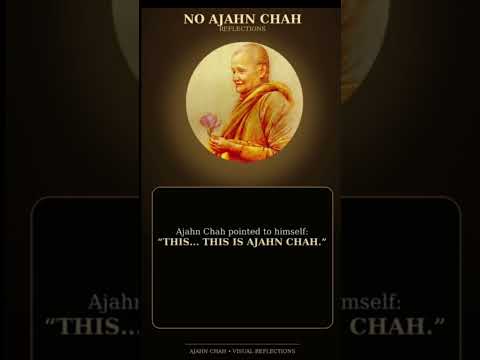
Ajahn Chah
Who Is Ajahn Chah? The Answer Points to Non-Self
Short TeachingWho is Ajahn Chah? At first, the answer seems simple. Yet when the same question is asked again, Ajahn Chah gives a completely different response—one that points directly toward the Buddhist teaching of non-self. In this silent visual reflection, a layman approaches Ajahn Chah and asks, “Who is Ajahn Chah?” Seeing that the man is not yet ready for a deeper understanding, Ajahn Chah points to himself and says, “This… this is Ajahn Chah.” Later, another person asks the same question. This time, Ajahn Chah recognizes that the questioner may be able to understand something beyond the ordinary idea of personal identity. His answer is simple, direct, and profound: “Ajahn Chah? There is no Ajahn Chah.” These words do not deny the conventional person known as Ajahn Chah. Rather, they point beyond the name, body, personality, memories, and social identity that we habitually take to be a permanent self. In daily life, names are necessary. We use them to communicate and identify one another. But when examined deeply, no fixed and independent person can be found. The body changes. Feelings change. Perceptions, thoughts, moods, and consciousness continually arise and pass away. What we call a person is a changing process rather than a permanent owner or unchanging essence. Ajahn Chah often taught through short statements that caused people to look directly into their own experience. His teaching was not meant only for intellectual discussion. It was an invitation to observe: What exactly do we call “me”? Is the body truly mine? Can thoughts be controlled? Are feelings permanent? Where is the unchanging self? This visual Short is based on the opening reflection from No Ajahn Chah – Reflections, a collection of teachings presenting Ajahn Chah’s practical wisdom on meditation, impermanence, suffering, letting go, and non-self. There is no spoken narration in this video. The teaching is presented through gentle visuals, music, and on-screen text, allowing space for quiet contemplation. Pause for a moment and ask yourself: Who am I beneath the name, the body, the memories, and the story? #AjahnChah #BuddhistTeachings #NonSelf #Anatta #Dhamma #Meditation #Mindfulness #ThaiForestTradition #Buddhism #Wisdom
 06:39
Ajahn Dtun
When Nothing Is Mine, the Mind Is Free!
Selected Section🔅 Venerable Ajahn Dtun – Observing Impermanence: Training the Mind in Everyday Practice Venerable Ajahn Dtun, a respected meditation master in the Thai Forest Tradition and a senior disciple of Ajahn Chah, offers profound guidance on the direct observation of impermanence and the cultivation of insight through daily life. In this teaching, Ajahn Dtun encourages practitioners to carefully observe the changing nature of all experiences—both internal and external. Whether it is a thought, a feeling, a sound, or a physical object, everything arises and passes away according to its nature. By clearly seeing this constant flow of change, the mind begins to develop wisdom and detachment. He explains that this reflection on impermanence (anicca) should not be limited to formal meditation. It can be integrated into everyday life—while seeing objects around us, interacting with people, or experiencing sensory contact such as taste or sound. Each experience, when observed closely, is found to be temporary and ultimately ceases. Ajahn Dtun also highlights that although this understanding is simple in theory, it requires steady practice. A strong foundation in virtue and disciplined living, including keeping the five precepts, supports the development of mindfulness and wisdom. With this foundation, the mind becomes more capable of observing both internal mental states and external phenomena clearly. He further points to the essence of insight (vipassana): seeing everything as impermanent and not-self, leading the mind toward a deeper sense of emptiness—where it no longer clings or identifies with anything in the world. In this way, the teachings of the Buddha are directly realized through experience rather than conceptual understanding. Ajahn Dtun uses the analogy of a journey: even if the destination feels far away, continuous effort—step by step—naturally leads one forward. Likewise, in meditation practice, persistence in developing wholesome qualities gradually leads the practitioner toward liberation. This teaching reminds us that awakening is not achieved through sudden effort alone, but through steady cultivation—continually letting go of what is unwholesome and strengthening what is good. May this Dhamma reflection support your practice of mindfulness, deepen your insight into impermanence, and inspire sincere effort on the path to liberation. 🔔 Subscribe for more Dhamma teachings: 🍃 The Still Path 🍃 #AjahnDtun #Impermanence #Vipassana #Mindfulness #Buddhism #DhammaTalk #ThaiForestTradition #AjahnChahLineage #Meditation #Insight #NonSelf #Nibbana #SpiritualPractice #TheStillPath
 32:48
Ajahn Dtun
Practice Is More Than Meditation
Complete TalkDhamma practice is not only something we do while sitting in meditation. In this teaching, Ajahn Dtun explains how lay practitioners can develop goodness, mindfulness, and wisdom in daily life. He reminds us that merit begins with a wholesome mind: faith in the Buddha, confidence in the Dhamma, generosity, keeping the precepts, and training the mind through meditation. But practice should not stop after ten minutes of sitting. We must also guard the mind throughout the day. Ajahn Dtun encourages laypeople to perform their daily duties well — as parents, children, husbands, wives, siblings, friends, and spiritual companions — while continuing to cultivate the mind according to the Buddha’s teaching. This talk is especially helpful for anyone practicing daily mindfulness, lay Dhamma practice, merit-making, keeping precepts, Buddho meditation, generosity, and the gradual training of the mind. #AjahnDtun #DailyPractice #DhammaTalk #LayPractice #Mindfulness #BuddhistMeditation #Merit #Sila #Buddho #ThaiForestTradition #Buddhism #MeditationPractice #SpiritualFriendship
 25:31
Ajahn Chah
The Path Must Be Walked in Your Own Heart
Selected SectionAjahn Chah explains that the path provides direction, but practice cannot be reduced to copying another person’s route step by step. As experience changes, the practitioner must investigate the conditions that actually arise in his or her own heart. Using sense contact as an example, he describes a mind trained to hear sounds without becoming entangled in them. The sound is known and hearing occurs, but the mind does not have to grasp, resist, or proliferate around the experience. This freedom does not come from escaping sensory contact. It develops by understanding sights, sounds, smells, tastes, bodily sensations, and mental events through impermanence, unsatisfactoriness, and not-self. As insight matures, letting go becomes less forced. Mindfulness and clear comprehension increasingly function together, and investigation begins to carry its own momentum. Feelings, perceptions, intentions, and consciousness continue performing their natural functions without being appropriated as “me” or “mine.” Ajahn Chah’s central point is practical: the Dhamma must become an inner investigation. Teachers and instructions can indicate a direction, but the decisive work happens where contact, reaction, attachment, and release are actually experienced. The path is both universal and personal. The principles are the Buddha’s, but each practitioner must walk them in his or her own heart, meeting each condition with mindfulness, investigation, and letting go.
 12:24
Ajahn Dtun
What Are the Knower and the Seer?
Question & AnswerWhat is the difference between the “knower” and the “seer” in meditation? Venerable Ajahn Dtun answers by shifting attention away from terminology and toward the transformation that actually takes place through practice. Mere knowledge or memory is not yet liberating insight. Everyone can know intellectually that human beings age, become sick and die. We can remember these facts and repeat them correctly, yet the heart may still cling to the body as “me” and “mine.” Ajahn Dtun explains that seeing in the Dhamma sense requires more than information. It depends on the complete training of sīla, samādhi and paññā — moral virtue, concentration and wisdom. When the mind is well grounded in virtue and strengthened by concentration, wisdom can investigate experience deeply enough for attachment to begin falling away. He uses contemplation of the body as an example. When the mind sees, not merely thinks, that the body is impermanent and not-self, attachment and identification are weakened. With continued development, the practitioner sees the same changing nature in one’s own body, in other people and in material things. The point is not to collect a special meditative label, but to change wrong view into right view through direct understanding. Ajahn Dtun also relates this to his own life before ordination. Reflections on ageing, sickness and death made him weary of heedless worldly living and encouraged him to cultivate goodness. Experiences of illness also prompted him to ask why the body could not simply be commanded to remain comfortable and healthy if it were truly under one’s control. Such reflections helped turn ordinary knowledge into a more penetrating investigation of body and mind. For this reason, Ajahn Dtun says he does not place great emphasis on the word “knower.” What people call the knower can still have defilement concealed within it. The important work is to develop the path until wisdom genuinely sees impermanence, unsatisfactoriness and not-self and the heart releases what it once grasped. The distinction is therefore experiential: “knowing” can remain a concept held by a mind that still clings, while “seeing” changes the way the heart relates to what is known. When wisdom truly sees change and non-self, the result is measurable in less attachment, less heedlessness and a stronger inclination toward goodness and release. #AjahnDtun #Knower #Wisdom #Vipassana #Meditation #ThaiForestTradition
 06:06
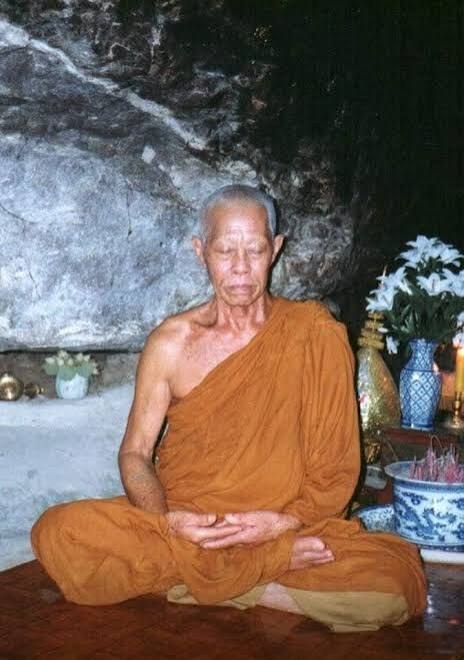 Ajahn Jia
Outer Personality Is Not Inner Spiritual Worth
Selected SectionThis autobiographical reflection challenges the tendency to judge spiritual worth by outward personality. The speaker recalls being rough, unruly, irreverent, and ready to fight in his younger years. Even as a monk his manner could remain forceful. But personality traits belong to the changing aggregates and should not automatically be confused with the depth of a person’s inner development. The story of Angulimāla is used to make the point vividly. Before meeting the Buddha, Angulimāla had become a feared killer. Yet his past and outward reputation did not make awakening impossible. The Buddha’s encounter with him led to a radical change of direction, and Angulimāla eventually attained arahantship. The lesson is not that harmful conduct is unimportant. Rather, Buddhist practice recognizes the possibility of profound transformation. A person cannot be reduced forever to an earlier version of himself, nor can spiritual maturity be measured simply by manners, appearance, or reputation. This reflection is especially useful when approaching strong personalities in the forest tradition. Direct speech, rough edges, or unconventional behaviour can easily be interpreted through ordinary social expectations. The Dhamma asks for a deeper assessment: what has happened in the heart, what has been abandoned, and what qualities have actually been developed? Dhamma does not merely polish personality; at its deepest, it transforms greed, hatred, and delusion.
 03:19
Ajahn Dtun
The Three Stages of Letting Go of the Body
Question & AnswerVenerable Ajahn Dtun is asked to explain his description of attachment to the body being abandoned in three portions. The teaching concerns the progressive weakening of identification with physical form as the Noble Path develops from stream entry through the higher stages. The “three portions” should not be understood as literal pieces of the body. They are a way of describing degrees of attachment. At the beginning, the ordinary mind strongly assumes that the body is self and that other bodies and material forms are objects worth clinging to. Through virtue, concentration, and repeated contemplation, that certainty begins to break apart. At the first major breakthrough, a coarse portion of identification is abandoned. Practice then continues with the same basic method—maintaining sīla, developing samādhi, and using mindfulness and wisdom to contemplate the body’s impermanence, unattractiveness, elemental nature, and lack of ownership. Further portions of attachment are weakened and relinquished as insight becomes deeper and more stable. Ajahn Dtun’s own descriptions of practice emphasize that this is not achieved by merely repeating “the body is not self.” The mind has to see the truth strongly enough that attraction, aversion, and identification actually lose their footing. At the stage where attachment to the body is completely abandoned, greed connected with material form, aversion, and sensual desire no longer function in the same way. The teaching gives practitioners a map without encouraging premature claims. The useful question is not “which portion have I reached?” but “what attachment is still operating, and what causes must I continue to develop so that wisdom can see more clearly?” For practitioners, the key is repeated investigation rather than merely adopting the idea that the body is not self. Concentration gives the mind stability; mindfulness and wisdom then examine change, elements, unattractiveness, ageing and death until attachment weakens through seeing. This teaching is relevant to body contemplation, asubha, anattā, impermanence, stream entry, samādhi, vipassanā and the Thai Forest Tradition’s emphasis on direct insight into the body. The value of the answer is its simplicity: do not turn the teaching into another object of speculation. Apply it, observe the result in the heart, and continue strengthening whatever qualities are still weak. Over time, repeated practice makes the difference between a principle we merely agree with and a Dhamma that actually changes how we respond to experience. #AjahnDtun #BodyContemplation #Anatta #Vipassana #Dhamma #ThaiForestTradition
“The body is not the self, that’s for certain, because it doesn’t obey us.”
Ajahn Dtun