About Kamma & Rebirth
Kamma means intentional action of body, speech and mind. The Buddha taught that beings are owners and heirs of their actions: what we do shapes who we become and the conditions we meet, in this life and beyond. Rebirth is the continuation of that process for as long as craving and ignorance remain, which is why the teaching on kamma is above all an encouragement to act well now.
Ajahn Pannavaddho gives a clear, unsentimental account. In Advice to Lay Buddhists: Morality, Kamma and Daily Life he says there is no god writing in a black book; we record our own actions, which return as results and shape character. Ajahn Dtun, heard most often here, takes up the questions people actually ask. In Does Mere Thinking Create Kamma? he explains that an unwholesome thought taints the mind yet differs from carrying it into action, and in How to Explain Rebirth to Children he begins with kamma rather than asking for blind belief.
Ajahn Chah’s stories show kamma at work in people’s lives, such as a proud village sceptic who denied kamma and later became a devoted supporter, while Ajahn Maha Boowa describes how defilements left unchecked keep the mind burdened.
Alongside these are teachings on merit, generosity, the moment of death and the goodness that is the only wealth we carry forward.
Teachings on Kamma & Rebirth
68 teachings
Insights from all teachers, across every format, together with related Dhammapada verses.
 14:18
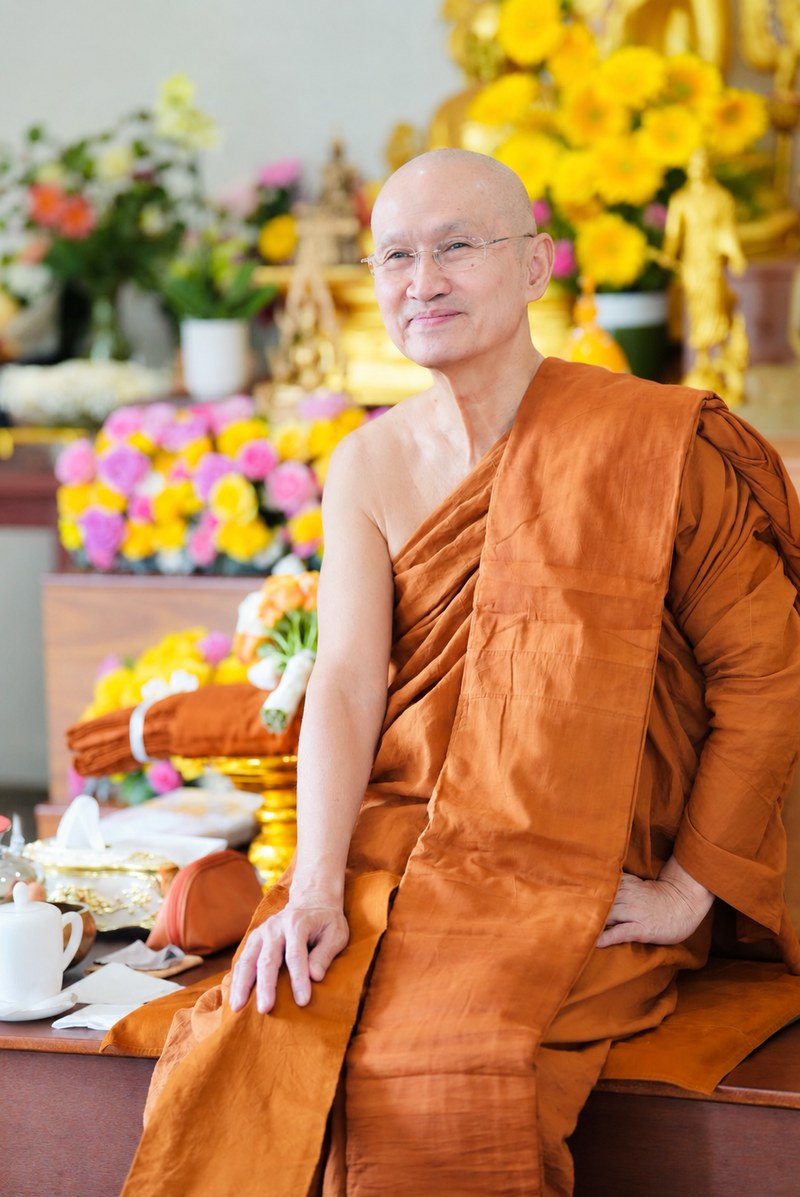 Ajahn Dtun
Can the Dead Receive Your Merit?
Question & AnswerExplains how to dedicate merit to the departed (e.g. using their own funds or offering money in their name) and warns not to rely on others to make goodness for us after death.
 09:43
Ajahn Dtun
Why the Same Gift Can Bring Different Fruit
Question & Answer🔅Does helping people in the community create the same kind of merit as making offerings to monks and those devoted to Dhamma practice? In this teaching, Venerable Ajahn Dtun explains an important distinction in Buddhist generosity. Helping people in society is genuinely wholesome. Caring for the elderly, the sick, orphans, people with disabilities, or anyone in need requires loving-kindness, compassion, and a generous heart. Such actions create goodness and bring happiness to the person who gives. However, Ajahn Dtun explains that although generosity is wholesome in both cases, the results or “fruit” of giving can differ according to the qualities of the recipient. In Buddhism, someone who maintains sīla, develops samādhi, cultivates wisdom, and works to reduce greed, anger, and delusion may be considered a particularly fertile “field of merit.” The more purified and developed the recipient’s mind, the greater the potential fruit of an offering made with a wholesome intention. This does not mean that helping ordinary people is unimportant or without merit. Ajahn Dtun clearly encourages us to help others whenever we are able. Generosity toward people who are suffering still develops compassion, kindness, and goodness within our own heart. The distinction is about the different results that generosity can produce. Ajahn Dtun gives a simple analogy: imagine planting the same rice seed in two different fields. One field is dry, full of weeds, poorly irrigated, and lacking fertile soil. The crop may still grow, but the harvest will be limited. The other field has rich soil, sufficient water, good irrigation, and proper conditions. The very same seed can produce a much greater harvest. Generosity works in a similar way. The intention to give is wholesome, but the “field” in which that generosity is planted can affect the resulting fruit. Ajahn Dtun therefore encourages a balanced approach. Help people in society. Support those who are suffering. Practise compassion wherever possible. And when the opportunity arises, also support monks, practitioners, and those sincerely cultivating the path of virtue, concentration, and wisdom. Both are forms of goodness. The seed is wholesome — but the harvest may not always be the same. #AjahnDtun #Dhamma #Generosity #Dana #Merit #BuddhistTeachings #Sangha
 06:41
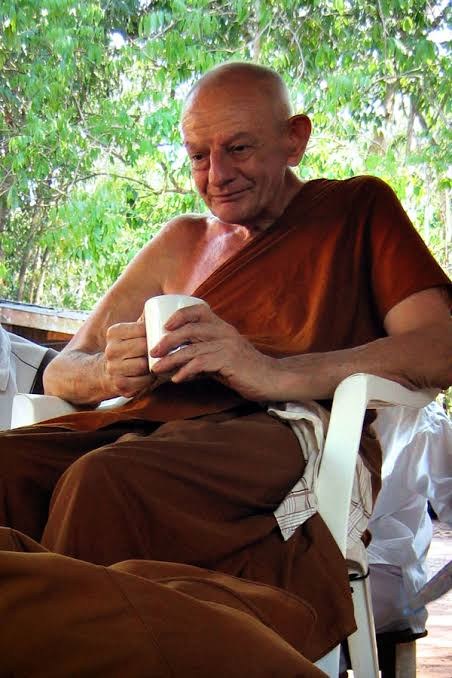 Ajahn Pannavaddho
BUDDHA or GOD | Ajahn Pannavaddho
Question & AnswerDoes Buddhism believe in God, and was the Buddha understood as a divine creator? Ajahn Pannavaddho examines these questions carefully, showing why the meaning of “God” must be clarified before any definite answer can be given. In this thoughtful discussion, Ajahn Pannavaddho begins with a simple comparison. A word such as “chair” refers to something we can point to directly. The word “God,” however, usually refers to an idea that cannot be demonstrated in the same way. Our understanding of God may begin in childhood through parents, culture and religion, then gradually become refined into an inner concept or symbol. The deeper question is whether an independent reality exists that corresponds exactly to that mental symbol. He then considers the idea of a creator. Before asking who created the world, we must first examine what we mean by “the world,” “creation” and even “time.” Because these ideas are difficult to define, Ajahn Pannavaddho explains that it is not easy either to prove or categorically deny the existence of God. His response is not hostile towards Christianity. He acknowledges the value of Christian morality and says that a person who sincerely practises Christianity may become a very good person and reach a heavenly realm. From the Buddhist perspective, however, heaven is not the final goal. Like every conditioned state, heavenly existence is impermanent. It may last for an extraordinarily long time, but eventually it must change. The conversation then turns to the Buddhist understanding of heavenly realms and the kinds of actions that may lead to rebirth there. Ajahn Pannavaddho points to Mother Teresa as an example of a person who performed great good for others. He explains that the person most deeply affected by a good action is the one who performs it, because every intentional action shapes the mind of the doer. This leads directly to the principle of kamma. Our actions are driven by volition, and that volition helps establish the pattern of our future. Goodness is therefore more than an outward performance: it changes the person who acts and influences the direction of future experience. Rather than asking listeners to accept a simple slogan, Ajahn Pannavaddho encourages careful investigation. The important issue is not winning an argument about religious language, but understanding the mind, living morally and taking responsibility for intentional actions. This teaching offers a balanced Buddhist reflection on God, Christianity, heaven, kamma and rebirth, while encouraging thoughtful inquiry rather than argument or dogmatic belief. #Dhamma #BuddhistTeachings #Wisdom
 33:44
Ajahn Dtun
The Wealth That Follows You Beyond This Life
Complete Talk🔅 Venerable Ajahn Dtun – What Are You Really Investing In? Venerable Ajahn Dtun offers a profound reflection on how we use the precious time and opportunity given to us in this human life. In this Dhamma teaching, he draws a deep comparison between worldly investment and spiritual investment—reminding us that while we spend our time and energy seeking external wealth, we should also make the effort to develop the wealth that exists within the mind. In worldly life, we invest our time and effort in work, business, and the pursuit of material security. In the same way, coming to the monastery, giving our time, practising generosity, and developing goodness are forms of spiritual investment—an investment in the inner wealth of the heart and mind. This inner wealth is far more valuable than anything that can be accumulated externally. Ajahn Dtun explains that the foundation of this journey is Right View (Sammā-diṭṭhi). When we do not see clearly, we can spend our entire lives pursuing worldly happiness while allowing our days and years to pass without meaningful spiritual development. But when we develop Right View, we begin to recognise the precious opportunity of being born as a human being and encountering the Buddha's teachings. The teaching also reminds us that the cultivation of goodness requires time, commitment, patience, and perseverance. Just as a person must invest time and effort in worldly work to receive its results, spiritual qualities must also be patiently cultivated. Every act of generosity, every effort to keep the precepts, and every sincere effort to practise becomes part of the gradual development of our spiritual path. Ajahn Dtun also reflects on the importance of supporting places where people can practise the Buddha's teachings. The establishment and support of monasteries provide opportunities for monastics to practise and for the Buddhist community to come together, cultivate goodness, and develop their minds. A particularly meaningful part of the teaching is his reflection on the spread of the Buddha's teachings. He recalls the ancient tradition of Dhamma being carried to different places and considers the opportunity to establish places of practice in Australia as a way of supporting people who sincerely wish to develop themselves through the Dhamma. Yet the deepest message is that the Dhamma journey is a journey of our own making. It may be long, just as a physical journey may be long, but if we have patience and perseverance, resting when we are tired and continuing when we have strength, eventually we reach our destination. In the same way, the development of the mind requires continuous effort and determination. Ajahn Dtun reminds us that progress on the spiritual path will not be the same for everyone. Whether we arrive quickly or slowly depends upon how we conduct our lives, how heedfully we practise, and how much effort we make to develop ourselves according to the Buddha's teachings. Ultimately, this Dhamma reflection invites us to ask a very important question: What are we really investing in with our life? Are we investing only in things that will eventually disappear, or are we also cultivating the inner spiritual wealth that supports the journey beyond this temporary life? May this teaching inspire us to use our precious human life wisely, develop Right View, cultivate generosity and goodness, practise the Dhamma with patience and perseverance, and continually invest in the true wealth of the heart. 🔔 Subscribe for more authentic Dhamma teachings 🍃 The Still Path 🍃 #AjahnDtun #Dhamma #Buddhism #Meditation #ThaiForestTradition #AjahnChah #SpiritualWealth #RightView #Merit #BuddhistTeachings #DhammaTalk #MindTraining #InnerPeace #SpiritualPractice #TheStillPath
 00:48
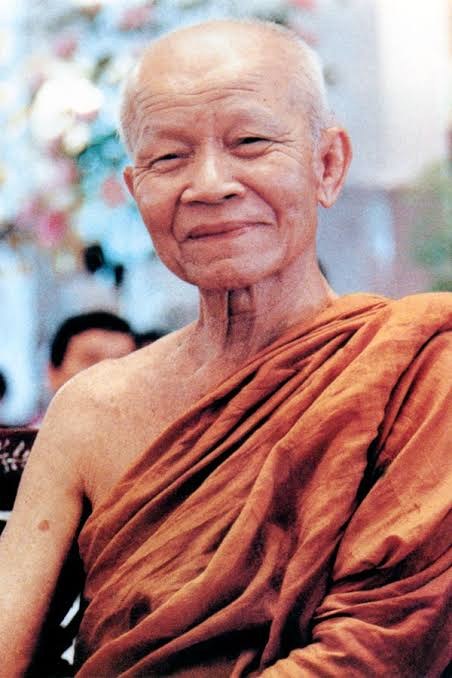 Ajahn Maha Boowa
Pain Means Nothing to the Citta — Ajahn Maha Boowa
Selected SectionAjahn Mahā Boowa explains that painful feelings do not create suffering by themselves. Only when the citta gives them personal meaning does suffering arise. Ajahn Maha Boowa’s Direct Route to Nibbana presents a profound series of Thai Forest Dhamma teachings on the complete path from basic meditation to final liberation. Based on Arahattamagga, Arahattaphala, and Nibbana, these talks explain how mindfulness, samadhi, wisdom, and determined investigation gradually free the heart from suffering, attachment, ignorance, and the cycle of birth and death. Throughout the series, Ajahn Maha Boowa gives practical guidance on Buddho meditation, concentration, mindfulness of the body, contemplation of pain, fear of death, the five khandhas, impermanence, suffering, not-self, and the nature of the citta. He shows how meditators can separate pain, body, feeling, memory, thought, and awareness, so that experience is understood clearly rather than grasped as “me” or “mine.” The teachings examine body contemplation in depth, including the illusion of beauty, attachment to form, decay, unattractiveness, and the point at which body images finally cease. Ajahn Maha Boowa also warns that deep samadhi, radiant awareness, peaceful meditation states, and subtle knowing are not yet Nibbana. Even the luminous citta must be investigated until avijja, the final root of delusion, is completely destroyed. Later sections describe the falling away of duality, the end of attachment, the appearance of supreme Dhamma, and the direct realization of Nibbana. The series also explores kamma, rebirth, heaven and hell, compassion, teaching the Dhamma, the nature of an arahant, and why pure Dhamma remains untouched by praise, blame, argument, or misunderstanding. These teachings are especially valuable for serious practitioners of Theravada Buddhism, vipassana meditation, samatha meditation, mindfulness, body contemplation, insight practice, and the Thai Forest Tradition. They are suitable for meditators who want to understand the deeper stages of the path beyond temporary calm, spiritual experiences, or intellectual knowledge. Students of Buddhism will find explanations of advanced meditation without losing the practical foundation: morality, restraint, mindfulness, persistence, and wise investigation. Each video forms part of one continuous journey from ordinary suffering to awakening, arahantship, and unshakeable inner peace. The Direct Route to Nibbana is not a promise of quick enlightenment. It is a call to practise with courage, patience, honesty, and total commitment. Ajahn Maha Boowa repeatedly directs attention back to immediate experience, where suffering arises and where wisdom can cut through attachment. Listen carefully, reflect deeply, and apply these teachings in meditation and daily life as a guide toward dispassion, freedom, and the complete end of suffering. #AjahnMahaBoowa #Nibbana #Dhamma #Meditation #ThaiForestTradition #TheravadaBuddhism #Vipassana #Samadhi #BuddhistTeachings #Dhamma #BuddhistTeachings #Wisdom
 06:09
Ajahn Dtun
Can We Know the Amount of Pāramī We’ve Built?
Question & AnswerHow can we know which pāramī, or spiritual perfection, is weak and needs more development? Venerable Ajahn Dtun gives a very practical answer: look honestly at the places where your conduct and practice repeatedly break down. Weakness reveals what needs to be strengthened. If a person makes a resolution but repeatedly fails to follow through, the perfection of sacca — truthfulness or fidelity to one’s word — needs development. If patience disappears as soon as difficulty or discomfort arises, khanti, patient endurance, is weak. If the precepts are kept only when convenient and are relaxed whenever circumstances become difficult, the perfection of moral virtue needs strengthening. In this way, pāramī is not something mysterious that must be measured through supernatural knowledge; its condition can often be seen in ordinary daily behaviour. Ajahn Dtun applies the same principle to meditation. Some people sit repeatedly but find that the mind rarely becomes peaceful. He explains that this can indicate that the supporting causes for concentration were not strongly cultivated in the past. The answer is not to give up. This life becomes the opportunity to build what is lacking through repeated practice. In fact, this is where other pāramīs become essential: patience to remain with difficulty, effort to continue, and truthfulness to honour the intention to practise. He uses the example of a group that agrees to meet regularly for Dhamma practice. Simply making the commitment and continuing to show up strengthens sacca. Making the effort to attend develops viriya, energy or perseverance. Sitting through discomfort without abandoning the practice develops khanti. The perfections therefore support one another rather than growing in isolation. Ajahn Dtun’s teaching gives a constructive way to look at weakness. A restless mind, inconsistent discipline or lack of endurance is not a reason for discouragement. It is information. See clearly which quality is lacking and deliberately practise that quality more often. Over time, repeated choices become strength of character. Pāramī grows because we keep doing what is wholesome even when it is difficult, gradually making the heart more dependable and better prepared for deeper meditation and wisdom. This makes the pāramīs concrete and observable. We do not need to wait for a special sign telling us what is weak. A broken promise, impatience with pain, irregular meditation or laxity in the precepts already provides useful feedback. Each difficulty can become the exact training ground in which that particular perfection is deliberately strengthened. #AjahnDtun #Parami #Meditation #Patience #Dhamma #ThaiForestTradition
 14:16
Ajahn Maha Boowa
Pain Could No Longer Touch His Mind | Ajahn Mahā Boowa
Selected SectionAjahn Mahā Boowa describes a decisive night of meditation, where severe pain became the doorway to seeing body, feeling, and citta as separate realities. Ajahn Maha Boowa’s Direct Route to Nibbana presents a profound series of Thai Forest Dhamma teachings on the complete path from basic meditation to final liberation. Based on Arahattamagga, Arahattaphala, and Nibbana, these talks explain how mindfulness, samadhi, wisdom, and determined investigation gradually free the heart from suffering, attachment, ignorance, and the cycle of birth and death. Throughout the series, Ajahn Maha Boowa gives practical guidance on Buddho meditation, concentration, mindfulness of the body, contemplation of pain, fear of death, the five khandhas, impermanence, suffering, not-self, and the nature of the citta. He shows how meditators can separate pain, body, feeling, memory, thought, and awareness, so that experience is understood clearly rather than grasped as “me” or “mine.” The teachings examine body contemplation in depth, including the illusion of beauty, attachment to form, decay, unattractiveness, and the point at which body images finally cease. Ajahn Maha Boowa also warns that deep samadhi, radiant awareness, peaceful meditation states, and subtle knowing are not yet Nibbana. Even the luminous citta must be investigated until avijja, the final root of delusion, is completely destroyed. Later sections describe the falling away of duality, the end of attachment, the appearance of supreme Dhamma, and the direct realization of Nibbana. The series also explores kamma, rebirth, heaven and hell, compassion, teaching the Dhamma, the nature of an arahant, and why pure Dhamma remains untouched by praise, blame, argument, or misunderstanding. These teachings are especially valuable for serious practitioners of Theravada Buddhism, vipassana meditation, samatha meditation, mindfulness, body contemplation, insight practice, and the Thai Forest Tradition. They are suitable for meditators who want to understand the deeper stages of the path beyond temporary calm, spiritual experiences, or intellectual knowledge. Students of Buddhism will find explanations of advanced meditation without losing the practical foundation: morality, restraint, mindfulness, persistence, and wise investigation. Each video forms part of one continuous journey from ordinary suffering to awakening, arahantship, and unshakeable inner peace. The Direct Route to Nibbana is not a promise of quick enlightenment. It is a call to practise with courage, patience, honesty, and total commitment. Ajahn Maha Boowa repeatedly directs attention back to immediate experience, where suffering arises and where wisdom can cut through attachment. Listen carefully, reflect deeply, and apply these teachings in meditation and daily life as a guide toward dispassion, freedom, and the complete end of suffering. #AjahnMahaBoowa #Nibbana #Dhamma #Meditation #ThaiForestTradition #TheravadaBuddhism #Vipassana #Samadhi #BuddhistTeachings #Dhamma #BuddhistTeachings #Wisdom
 00:50
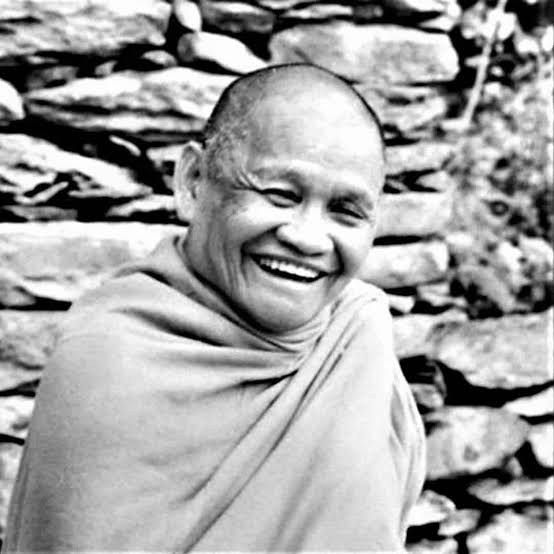 Ajahn Chah
Why Do We Want to Be Born Again?
Short TeachingWhy do we long for another birth without considering what birth actually involves? In this direct and challenging reflection, Ajahn Chah asks us to examine rebirth honestly—not as an attractive idea, but as another return to limitation, discomfort, suffering, aging, and death.
 02:59
Ajahn Maha Boowa
Continuous Samādhi Can Become a Trap — Ajahn Maha Boowa
Selected SectionAjahn Maha Boowa’s Direct Route to Nibbana presents a profound series of Thai Forest Dhamma teachings on the complete path from basic meditation to final liberation. Based on Arahattamagga, Arahattaphala, and Nibbana, these talks explain how mindfulness, samadhi, wisdom, and determined investigation gradually free the heart from suffering, attachment, ignorance, and the cycle of birth and death. Throughout the series, Ajahn Maha Boowa gives practical guidance on Buddho meditation, concentration, mindfulness of the body, contemplation of pain, fear of death, the five khandhas, impermanence, suffering, not-self, and the nature of the citta. He shows how meditators can separate pain, body, feeling, memory, thought, and awareness, so that experience is understood clearly rather than grasped as “me” or “mine.” The teachings examine body contemplation in depth, including the illusion of beauty, attachment to form, decay, unattractiveness, and the point at which body images finally cease. Ajahn Maha Boowa also warns that deep samadhi, radiant awareness, peaceful meditation states, and subtle knowing are not yet Nibbana. Even the luminous citta must be investigated until avijja, the final root of delusion, is completely destroyed. Later sections describe the falling away of duality, the end of attachment, the appearance of supreme Dhamma, and the direct realization of Nibbana. The series also explores kamma, rebirth, heaven and hell, compassion, teaching the Dhamma, the nature of an arahant, and why pure Dhamma remains untouched by praise, blame, argument, or misunderstanding. These teachings are especially valuable for serious practitioners of Theravada Buddhism, vipassana meditation, samatha meditation, mindfulness, body contemplation, insight practice, and the Thai Forest Tradition. They are suitable for meditators who want to understand the deeper stages of the path beyond temporary calm, spiritual experiences, or intellectual knowledge. Students of Buddhism will find explanations of advanced meditation without losing the practical foundation: morality, restraint, mindfulness, persistence, and wise investigation. Each video forms part of one continuous journey from ordinary suffering to awakening, arahantship, and unshakeable inner peace. The Direct Route to Nibbana is not a promise of quick enlightenment. It is a call to practise with courage, patience, honesty, and total commitment. Ajahn Maha Boowa repeatedly directs attention back to immediate experience, where suffering arises and where wisdom can cut through attachment. Listen carefully, reflect deeply, and apply these teachings in meditation and daily life as a guide toward dispassion, freedom, and the complete end of suffering. #AjahnMahaBoowa #Nibbana #Dhamma #Meditation #ThaiForestTradition #TheravadaBuddhism #Vipassana #Samadhi #BuddhistTeachingsn